


The Art of Car Price Negotiation: Win From Both Sides of the Table
Whether you're buying a used car and want to pay less, or selling your vehicle and want to maximize your profit, negotiation is a skill that can save or earn you hundreds — even thousands — of dollars. This guide gives you proven tactics from both the buyer's and seller's perspective

Why Most People Negotiate Wrong — and How to Fix It
Most buyers go into a car negotiation without a clear strategy, while most sellers overprice without data to back it up. The result? Both parties feel like they lost. Effective negotiation starts long before you ever meet the other party — it starts with research, preparation, and knowing your walk-away number.
Negotiation Tactics for Buyers
Use these strategies to confidently negotiate a fair — and often below-asking — price on your next used car purchase.
A dual-perspective guide covering the most effective negotiation strategies for both car buyers looking for the best deal and sellers trying to maximize their asking price.
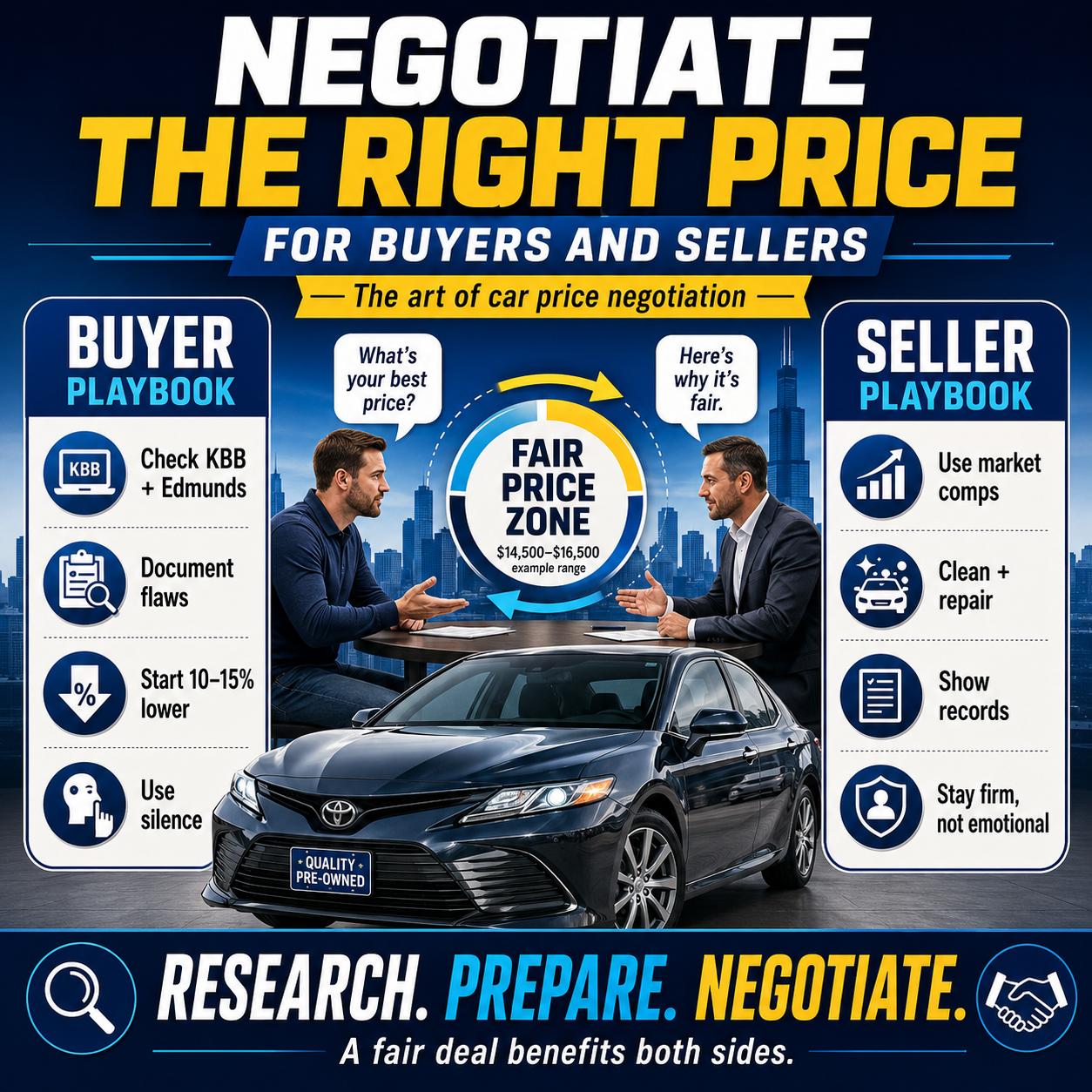
Buyer Tactic 1: Research the Market Value First
Before contacting any seller, research the fair market value of the specific make, model, year, and trim level you're targeting. Use Kelley Blue Book (kbb.com), Edmunds, and CarGurus to understand the price range in the Illinois market. Knowing that the average private-party price for a 2019 Honda Civic EX in the Chicago metro is $14,500–$16,500 gives you a factual foundation for your offer — not just a gut feeling.
Buyer Tactic 2: Find and Document the Car's Flaws
During your inspection, take note of every imperfection — paint chips, worn tires, cracked trim, service needs, high mileage. This isn't to embarrass the seller; it's to justify a lower offer. "The tires need replacing (about $600–$800), there are minor dents on the rear bumper, and it's due for a major service" is a compelling, data-backed reason to reduce the asking price.
Buyer Tactic 3: Make Your First Offer Low but Reasonable
Your opening offer should be 10–15% below what you're actually willing to pay. This gives you room to negotiate upward while still reaching your target price. Never offer so low that you insult the seller — aim for a number that's serious but clearly below asking price.
Buyer Tactic 4: Let Silence Work for You
After making your offer, stay silent. Many buyers feel uncomfortable with silence and immediately sweeten their offer — don't. Let the seller respond. Their counter-offer, body language, and willingness to negotiate tells you a great deal about how flexible they truly are.
Buyer Tactic 5: Be Ready to Walk Away
The most powerful position in any negotiation is genuine willingness to walk away. If the seller won't come down to a price you're comfortable with, thank them for their time and prepare to leave. Many sellers will call or text back within hours or days with a better offer.
Seller Tactic 1: Price Strategically, Not Emotionally
Base your asking price on real market data from KBB, Edmunds, and active Illinois listings — not on what you paid for the car or what you need to pay off your loan. Overpricing your car causes it to sit unsold for months. A car priced at fair market value sells quickly and generates more serious buyer inquiries.
Seller Tactic 2: Invest in a Pre-Sale Detail and Minor Repairs
A thoroughly cleaned, detailed car commands a significantly higher price than a dirty one. A full detail in Illinois typically costs $150–$300 and can increase your selling price by $500–$1,500. Fix minor issues — burned-out bulbs, cracked trim, worn wiper blades — before listing. Buyers notice everything.
Seller Tactic 3: Gather All Your Documents
Have your Illinois vehicle title, maintenance records, and any warranties or accessories documentation ready. Buyers pay more for cars with complete paperwork. It signals honesty, transparency, and that the vehicle was properly maintained.
Read Latest Articles
Simple, transparent process that gets you the best price for your car
Mar 06 2026
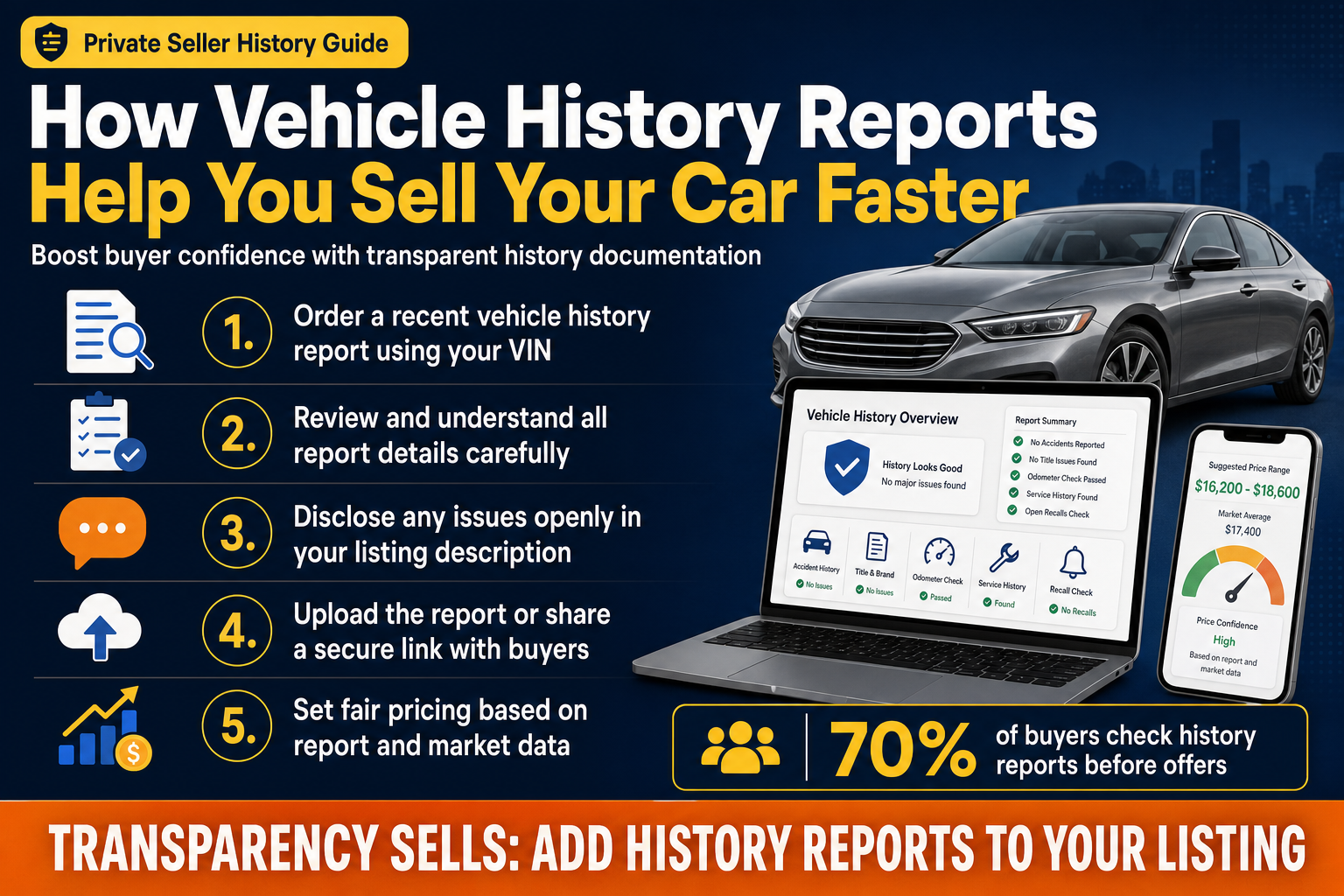
Essential Vehicle History Reports Every US Seller Should Provide
Selling your car privately? One of the most powerful tools to build trust and attract buyers is providing a detailed vehicle history report. These reports offer transparency about your car’s past — including accidents, title status, service records, and more — that buyers urgently want to know before making an offer. In this guide, you’ll learn exactly which vehicle history reports are important for US sellers, how to obtain them, and how to present this information effectively in your listings. We’ll also cover common pitfalls sellers face when they skip this step and how LazyChimp’s platform helps you showcase history reports to close sales faster. Ready to boost buyer confidence and sell smarter? Let’s dive into the must-have vehicle history documentation every private party seller should provide.
Anonymous
Read Article →
Mar 06 2026
How to Price Your Used Car Competitively for a Quick Private Sale
Selling your used car privately can be a rewarding way to get the best value, but setting the right price is crucial. Price it too high, and you risk scaring away potential buyers; price it too low, and you might leave money on the table.This guide walks you through practical steps to research and establish a competitive price for your vehicle. You'll learn how to balance market data, condition, and timing to attract serious buyers without undervaluing your car.By the end, you'll understand common pricing pitfalls to avoid and how tools like LazyChimp’s transparent pricing can give you an edge in today’s US car market.
Anonymous
Read Article →
Mar 06 2026
How to Price Your Used Car Competitively for a Faster Private Sale
Selling your car privately can be profitable, but pricing it right is crucial to attract buyers quickly. Overpricing means your vehicle sits on the market, while underpricing leaves money on the table. Understanding how to set a competitive price is key to a successful sale. In this guide, you will learn how to research market values, factor in your car’s condition, mileage, and location, and adjust your asking price strategically. We’ll also cover common pricing mistakes sellers make and share tips on how to leverage LazyChimp’s transparent pricing tools to your advantage. Whether you're selling a sedan, SUV, or pickup, this article provides actionable steps to price your used car competitively and sell faster without sacrificing value.
LazyChimp.Com
Read Article →