


How to Price Your Used Car Competitively for a Quick Private Sale
Selling your used car privately can be a rewarding way to get the best value, but setting the right price is crucial. Price it too high, and you risk scaring away potential buyers; price it too low, and you might leave money on the table.
This guide walks you through practical steps to research and establish a competitive price for your vehicle. You'll learn how to balance market data, condition, and timing to attract serious buyers without undervaluing your car.
By the end, you'll understand common pricing pitfalls to avoid and how tools like LazyChimp’s transparent pricing can give you an edge in today’s US car market.
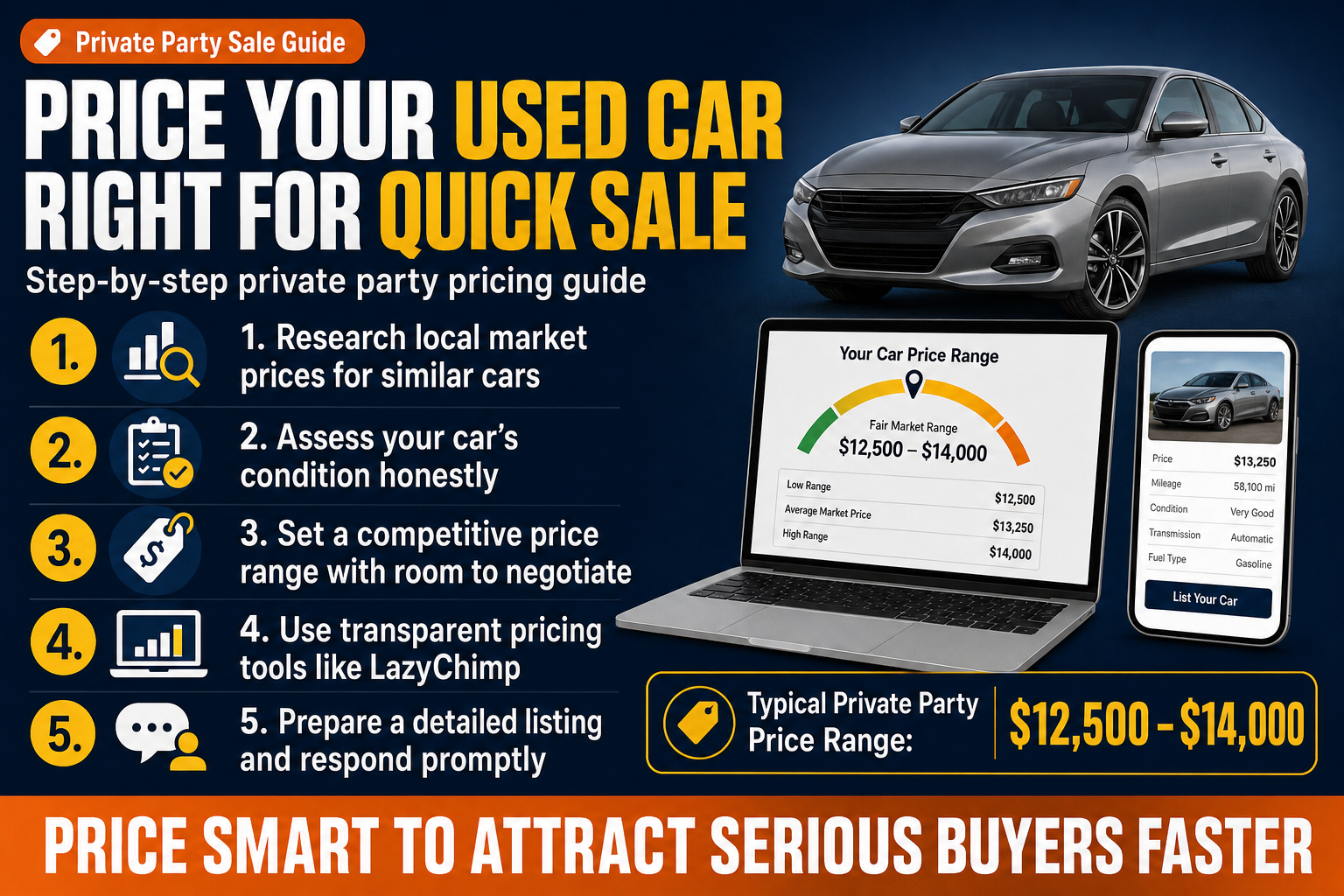
Step-by-step guide to setting the right price for your used car
Understanding market value: Before pricing your car, it's essential to understand how much similar vehicles are selling for in your area. Factors like make, model, year, mileage, condition, and location heavily influence price. Start by searching online marketplaces, including dealer listings and private party sales, to gather real-time data.
Use multiple sources: Don’t rely on just one pricing guide. Combine data from sites like Kelley Blue Book, Edmunds, and LazyChimp to get a comprehensive view. These platforms often provide trade-in, private party, and suggested retail prices. For private sellers, the private party price is the most relevant benchmark.
Assess your car’s condition honestly: Note any dents, scratches, mechanical issues, or needed maintenance. Cars in excellent condition command higher prices, while those with noticeable flaws should be priced accordingly. Consider getting a professional inspection or using a detailed checklist to evaluate your vehicle.
Consider timing and demand: Certain car types sell better during specific seasons — convertibles in summer, SUVs in winter, for example. Also, economic factors and fuel prices can affect demand. If you’re not in a rush, pricing your car slightly higher and waiting for the right buyer can pay off.
Create a pricing range: Instead of a fixed price, determine a realistic price range that you’re willing to accept. Start slightly above your minimum acceptable amount to leave room for negotiation. Be transparent about your pricing rationale when communicating with buyers.
Avoid these common pricing mistakes:
- Ignoring local market trends and pricing your car based solely on national averages.
- Setting an unrealistically high asking price that discourages inquiries.
- Failing to adjust price after a prolonged listing period without serious offers.
- Neglecting to account for repairs or cosmetic issues that affect value.
- Not using a trusted pricing tool to confirm your price aligns with market conditions.
Leverage LazyChimp’s transparent pricing: LazyChimp provides clear, data-driven price ranges based on dealer and private party listings in your ZIP code. By listing your car on LazyChimp, you gain access to competitive pricing insights and attract buyers who appreciate transparency. This reduces haggling time and increases buyer confidence.
Final checklist before listing:
- Gather recent sales data for comparable vehicles.
- Evaluate your car’s condition and note all relevant details.
- Set a competitive price range informed by multiple sources.
- Prepare high-quality photos and a detailed vehicle description.
- Choose the best time to list based on seasonal demand.
By carefully pricing your car with these steps, you increase your chances of a quick sale at a fair price, avoiding common pitfalls that slow down the process or lead to undervaluation.
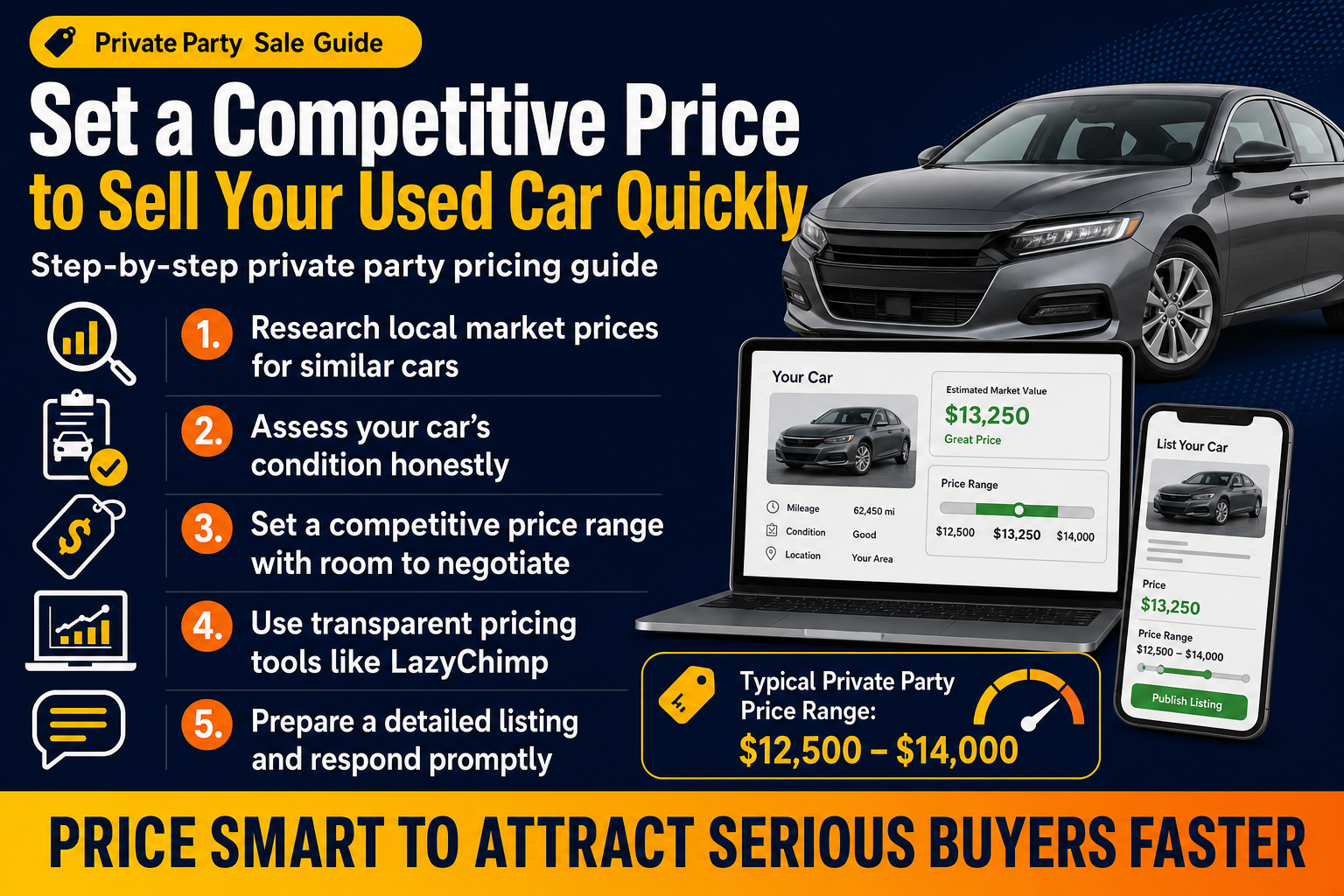
Maximize sale success with detailed pricing and listing strategies
Now that you know how to price your car effectively, it’s important to master the nuances of listing and negotiation to close the deal. This section explores advanced tips to make your listing stand out and handle buyer inquiries confidently.
Pro tip: Transparent pricing backed by local market data builds buyer trust and accelerates sales. Use tools like LazyChimp to set your price and communicate it clearly in your listing.
Once your price is set, focus on crafting a compelling listing and preparing for buyer interactions. Here are practical tips to help:
- Write a clear, honest description: Include all key details such as mileage, maintenance history, accident reports, and recent repairs. Transparency reduces buyer hesitation.
- Use quality photos: Show your car from multiple angles, including interior, engine bay, tires, and any imperfections. Well-lit and clear images attract more views.
- Respond promptly and professionally: Buyers appreciate quick, honest answers. Prepare to discuss price rationale and be open to reasonable negotiation within your price range.
- Schedule safe test drives: Meet in public places during daylight hours. Verify the buyer’s driver’s license and accompany them during the test drive.
- Finalize the sale properly: Complete a bill of sale and follow your state’s DMV requirements for title transfer. Make sure payment is secure before handing over keys.
By combining smart pricing with a polished, transparent listing and professional communication, you improve your chances of a smooth and profitable private sale. For more detailed tools and to list your vehicle confidently, browse current listings or start your listing on LazyChimp.com.
Read Latest Articles
Simple, transparent process that gets you the best price for your car
Mar 06 2026
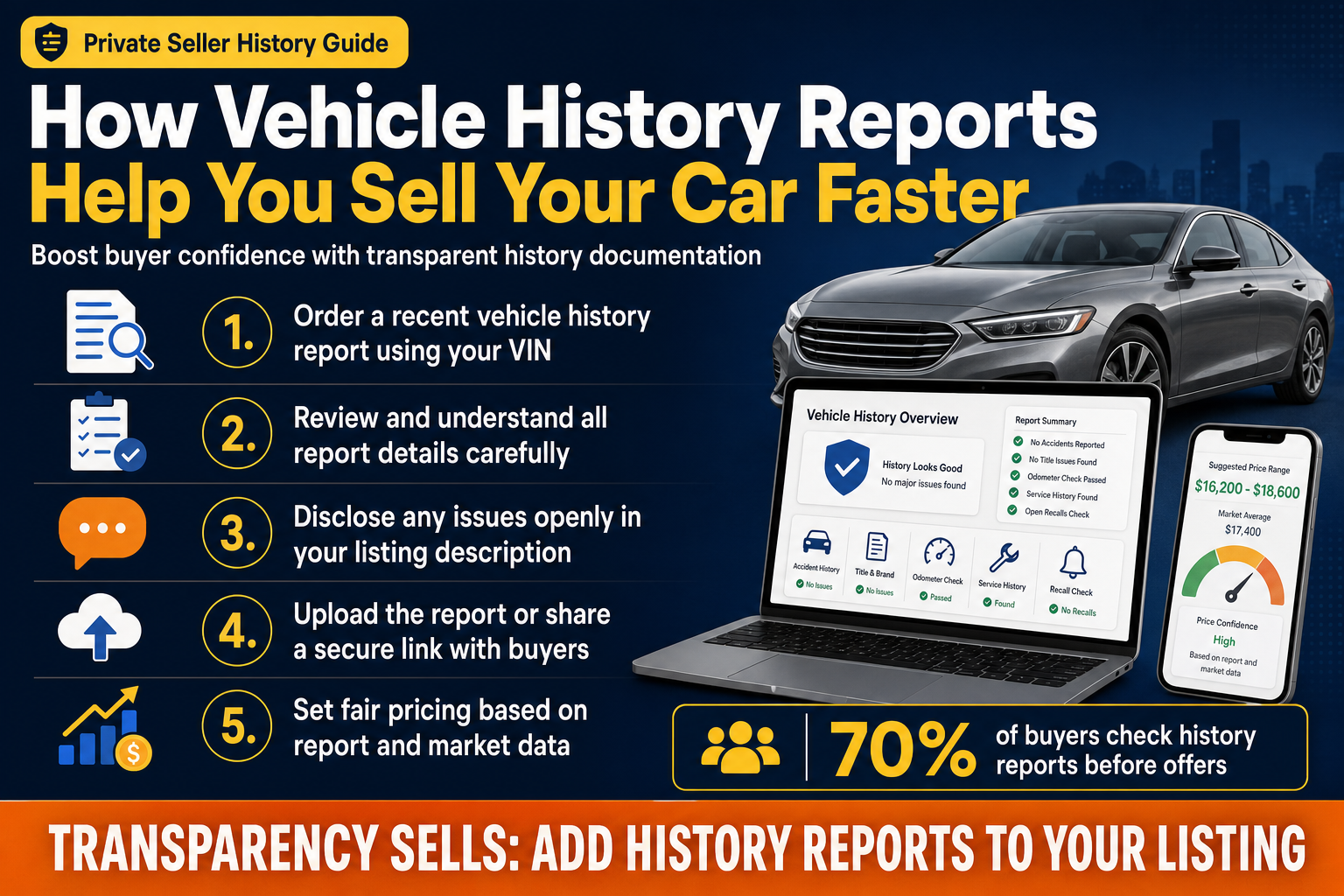
Essential Vehicle History Reports Every US Seller Should Provide
Selling your car privately? One of the most powerful tools to build trust and attract buyers is providing a detailed vehicle history report. These reports offer transparency about your car’s past — including accidents, title status, service records, and more — that buyers urgently want to know before making an offer. In this guide, you’ll learn exactly which vehicle history reports are important for US sellers, how to obtain them, and how to present this information effectively in your listings. We’ll also cover common pitfalls sellers face when they skip this step and how LazyChimp’s platform helps you showcase history reports to close sales faster. Ready to boost buyer confidence and sell smarter? Let’s dive into the must-have vehicle history documentation every private party seller should provide.
Anonymous
Read Article →
Mar 06 2026
How to Price Your Used Car Competitively for a Quick Private Sale
Selling your used car privately can be a rewarding way to get the best value, but setting the right price is crucial. Price it too high, and you risk scaring away potential buyers; price it too low, and you might leave money on the table.This guide walks you through practical steps to research and establish a competitive price for your vehicle. You'll learn how to balance market data, condition, and timing to attract serious buyers without undervaluing your car.By the end, you'll understand common pricing pitfalls to avoid and how tools like LazyChimp’s transparent pricing can give you an edge in today’s US car market.
Anonymous
Read Article →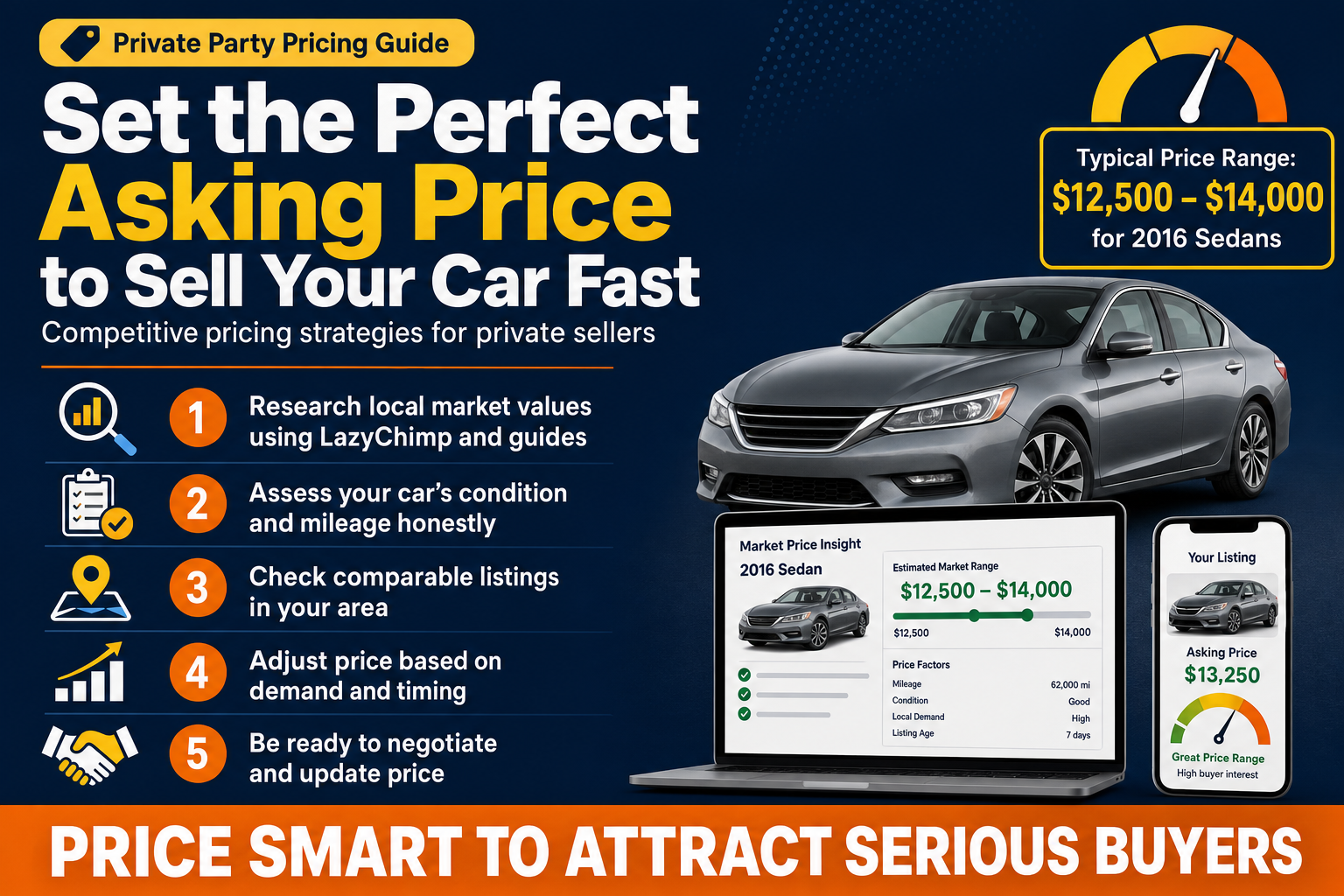
Mar 06 2026
How to Price Your Used Car Competitively for a Faster Private Sale
Selling your car privately can be profitable, but pricing it right is crucial to attract buyers quickly. Overpricing means your vehicle sits on the market, while underpricing leaves money on the table. Understanding how to set a competitive price is key to a successful sale. In this guide, you will learn how to research market values, factor in your car’s condition, mileage, and location, and adjust your asking price strategically. We’ll also cover common pricing mistakes sellers make and share tips on how to leverage LazyChimp’s transparent pricing tools to your advantage. Whether you're selling a sedan, SUV, or pickup, this article provides actionable steps to price your used car competitively and sell faster without sacrificing value.
LazyChimp.Com
Read Article →