


Dealer Paperwork Essentials: What Documents You Must Prepare for Every Vehicle Sale
As a car dealer, handling paperwork accurately and efficiently is critical to closing sales and staying compliant with state regulations. Missing or incomplete documents can delay transactions or lead to legal issues.
This article breaks down the essential documents dealers must prepare for every vehicle sale, including titles, bills of sale, disclosures, and DMV forms. We also cover best practices for organizing paperwork and avoiding common mistakes that slow down sales.
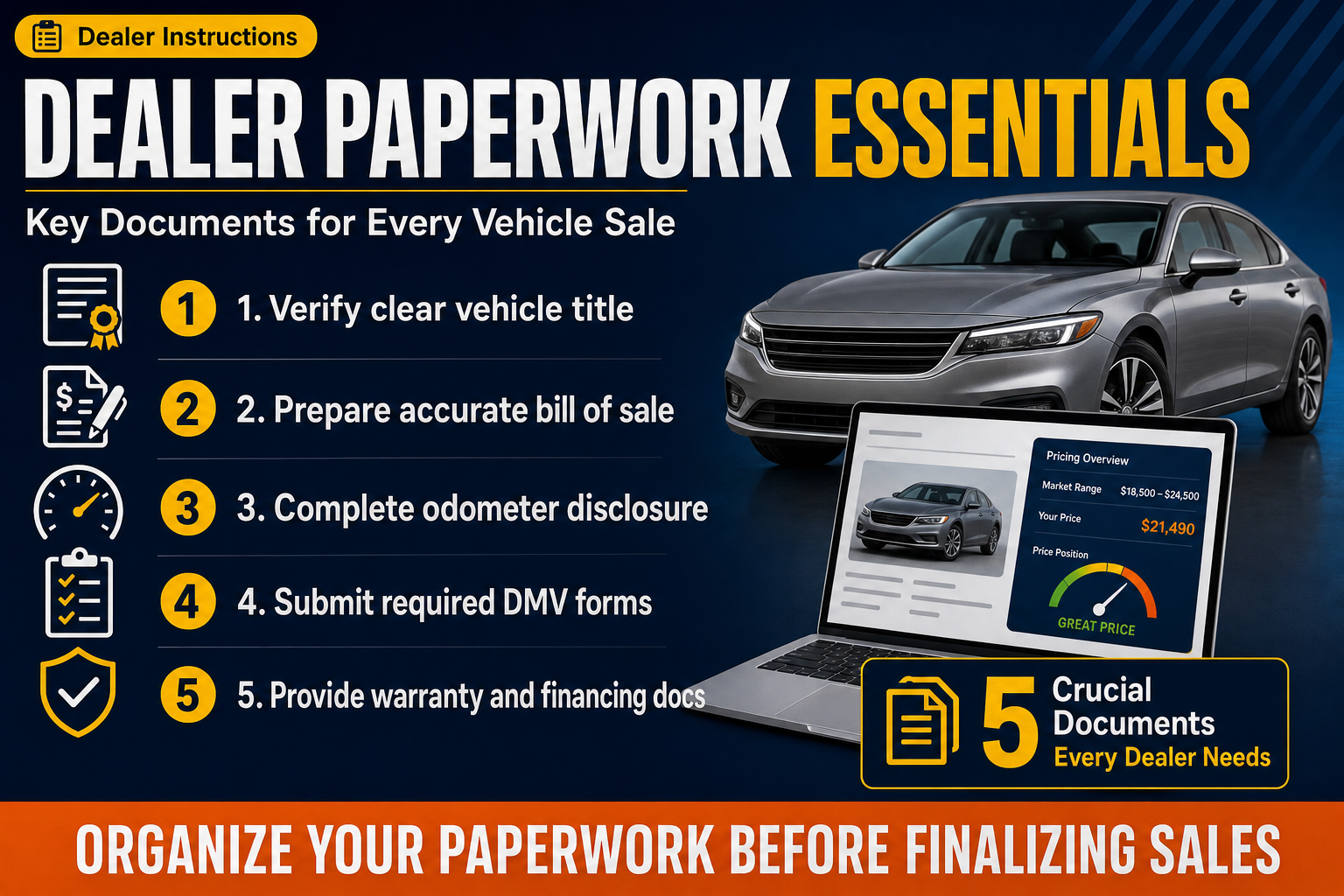
Key Documents Dealers Need for Every Vehicle Sale
Car dealers face unique challenges when managing sales paperwork compared to private sellers. Since dealers often handle multiple transactions daily, having a standardized process ensures compliance and builds customer trust. Below are the essential documents dealers must prepare and process during a vehicle sale.
1. Vehicle Title
The title is the legal proof of ownership. Dealers must ensure the title is clear of liens or encumbrances before completing a sale. If the vehicle has a lien, the dealer should coordinate with the lienholder to obtain a lien release. The title must be signed over to the buyer with accurate information filled in, including the odometer reading and sale date.
2. Bill of Sale
A bill of sale documents the transaction details such as buyer and seller names, vehicle information (VIN, make, model, year), sale price, and date of sale. Dealers often use standardized bill of sale forms required or recommended by their state. This document serves as a receipt and legal proof of the transaction.
3. Odometer Disclosure Statement
Federal law requires sellers to disclose the vehicle’s odometer reading at the time of sale for vehicles under 10 years old. Many states have specific odometer disclosure forms or include this statement on the title or bill of sale. Accurate odometer disclosure is critical to avoid penalties.
4. State-Specific DMV Forms
Dealers must submit all required paperwork to the DMV to transfer ownership and register the vehicle. This may include applications for title, registration, emissions certification, and tax forms. Each state has different requirements, so dealers must stay up to date with local DMV rules.
5. Warranty and Disclosure Documents
Depending on the sale type (new, used, certified pre-owned), dealers may need to provide warranty information or disclosures about the vehicle’s condition. This transparency helps reduce disputes and builds buyer confidence.
6. Payment and Financing Documents
Dealers handling financing or trade-ins must prepare loan agreements, credit applications, and trade-in valuation forms. Accurate documentation ensures clear terms and protects both dealer and buyer.
Organizing and Managing Paperwork
Efficient dealers use digital or physical filing systems to track all documents for each sale. This helps with audits, customer service inquiries, and legal compliance. Many dealers also use dealer management software that integrates paperwork processing with inventory and sales tracking.
Common Dealer Paperwork Mistakes to Avoid:
- Incomplete or unsigned titles
- Missing odometer disclosures
- Failing to submit DMV forms on time
- Using outdated or incorrect state forms
- Not providing required warranty or condition disclosures
By understanding and preparing these key documents, dealers can streamline sales, avoid legal issues, and improve customer satisfaction.
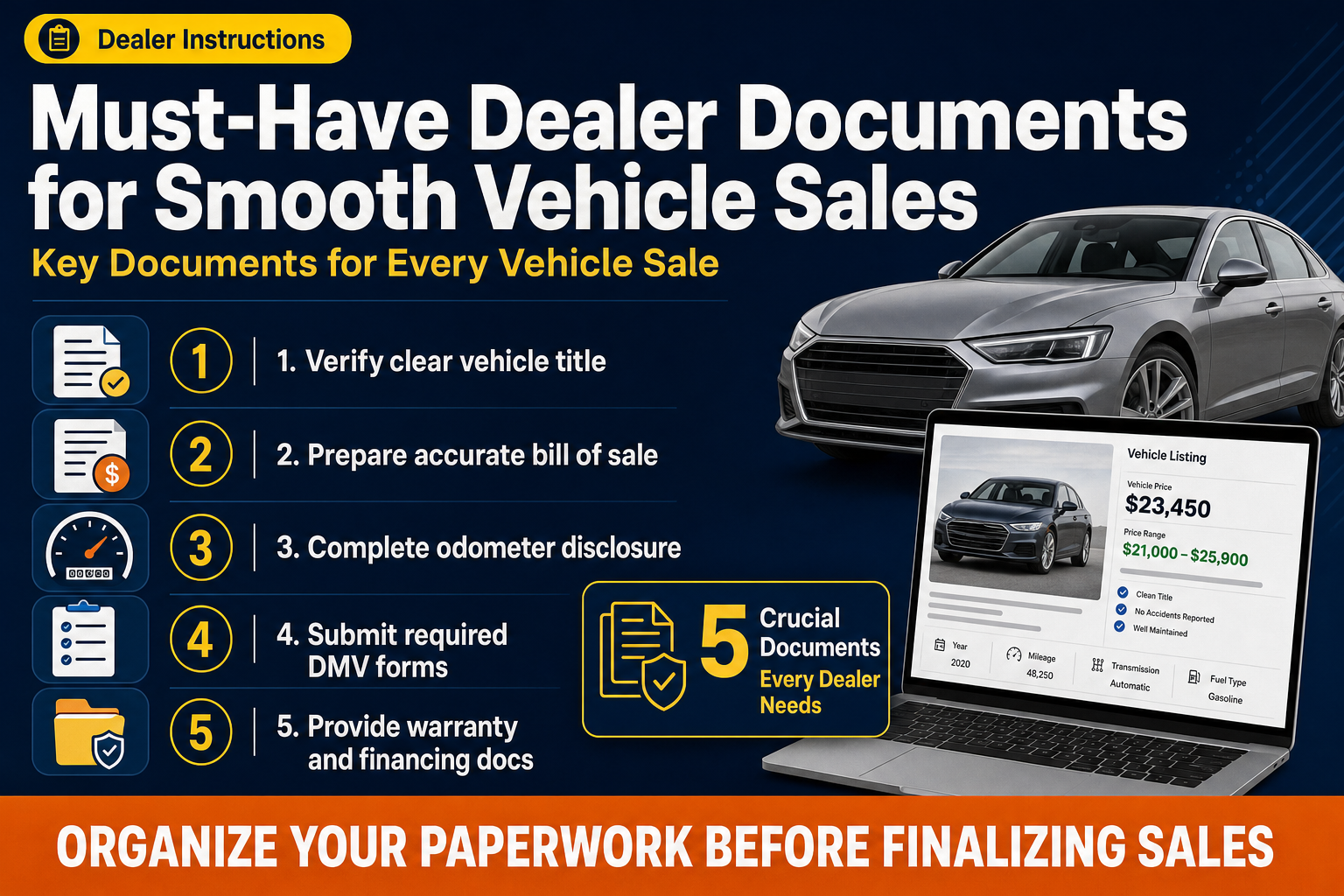
Handling Complex Dealer Paperwork Scenarios and Compliance Tips
Beyond standard sales, dealers often face complex situations like trade-ins, leased vehicles, or sales involving out-of-state buyers. This section addresses how to manage paperwork in these cases and maintain compliance.
Key insight: Staying current with your state’s DMV paperwork requirements and using standardized forms reduces errors and speeds up your vehicle sales process.
Here are additional dealer paperwork considerations for complex scenarios:
- Trade-Ins: Document the trade-in vehicle’s ownership and condition accurately. Ensure lien releases and payoff statements are obtained if applicable.
- Leased Vehicles: Sales involving lease buyouts require coordination with the leasing company for payoff amounts and title transfer documentation.
- Out-of-State Buyers: Verify the buyer’s residency and inform them about registration and tax requirements in their home state. Prepare any necessary export or temporary transit permits.
- Emissions and Safety Inspections: Many states require certification before sale. Keep copies of inspection reports and ensure vehicles meet local standards.
- Electronic Signatures and Digital Documents: Increasingly accepted, these can speed up processes but require compliance with legal standards for authenticity and recordkeeping.
Always confirm with your state DMV and legal advisors to ensure your dealership’s paperwork practices meet all regulatory requirements. Proper preparation and attention to detail reduce delays, protect your business, and create a professional buyer experience.
Read Latest Articles
Simple, transparent process that gets you the best price for your car
Mar 06 2026
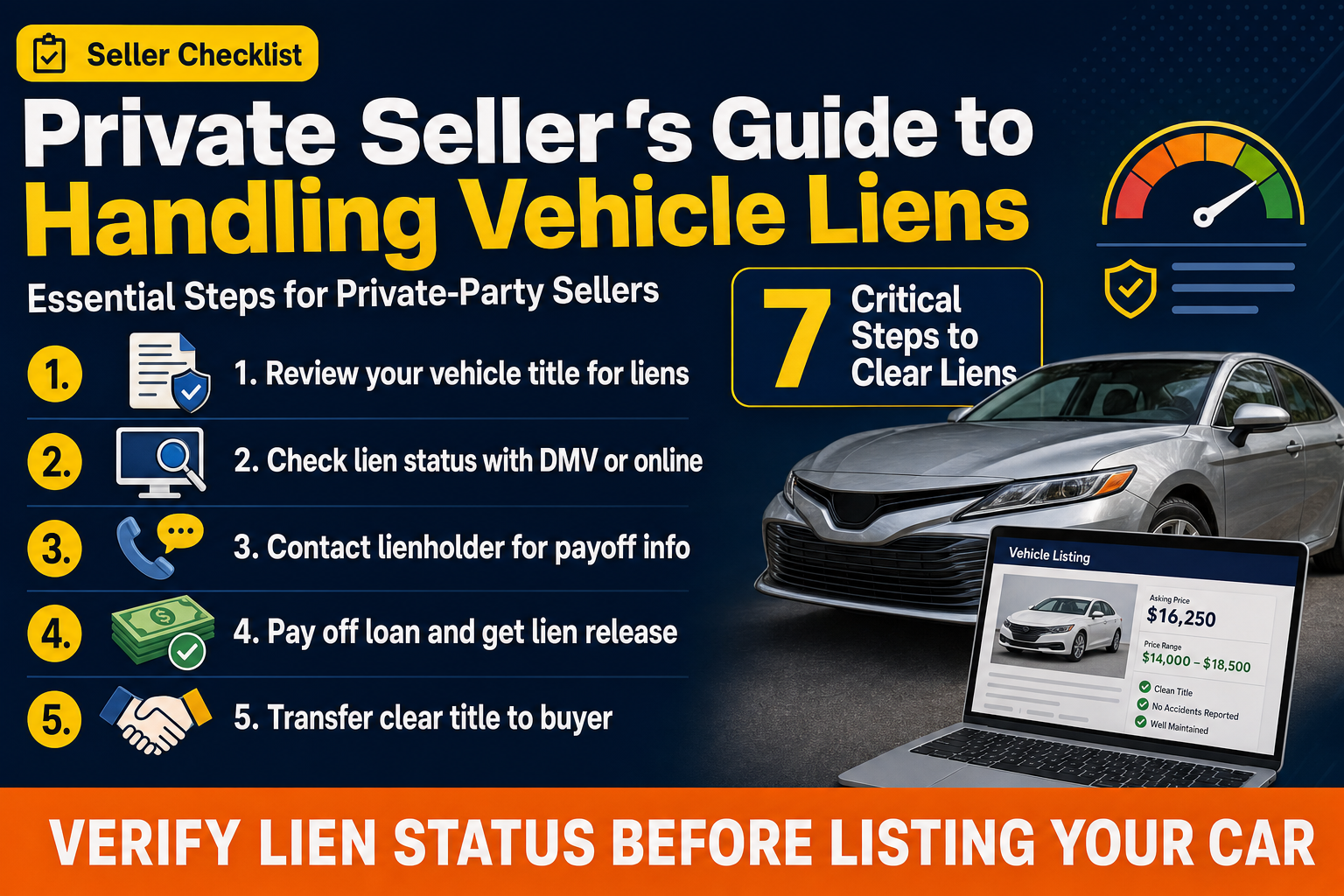
Private-Party Seller Checklist: How to Check for Liens Before Selling Your Car
Before selling your car privately, it’s essential to verify whether there are any liens on your vehicle. A lien means a lender or creditor has a legal claim on your car until a debt is paid off, which can complicate or invalidate your sale if not addressed. This checklist walks you through how to find out if your car has liens, what steps to take if liens exist, and how to clear them so you can sell your vehicle smoothly and legally.
T. K.
Read Article →
Mar 06 2026
Dealer Paperwork Essentials: What Documents You Must Prepare for Every Vehicle Sale
As a car dealer, handling paperwork accurately and efficiently is critical to closing sales and staying compliant with state regulations. Missing or incomplete documents can delay transactions or lead to legal issues. This article breaks down the essential documents dealers must prepare for every vehicle sale, including titles, bills of sale, disclosures, and DMV forms. We also cover best practices for organizing paperwork and avoiding common mistakes that slow down sales.
T. K.
Read Article →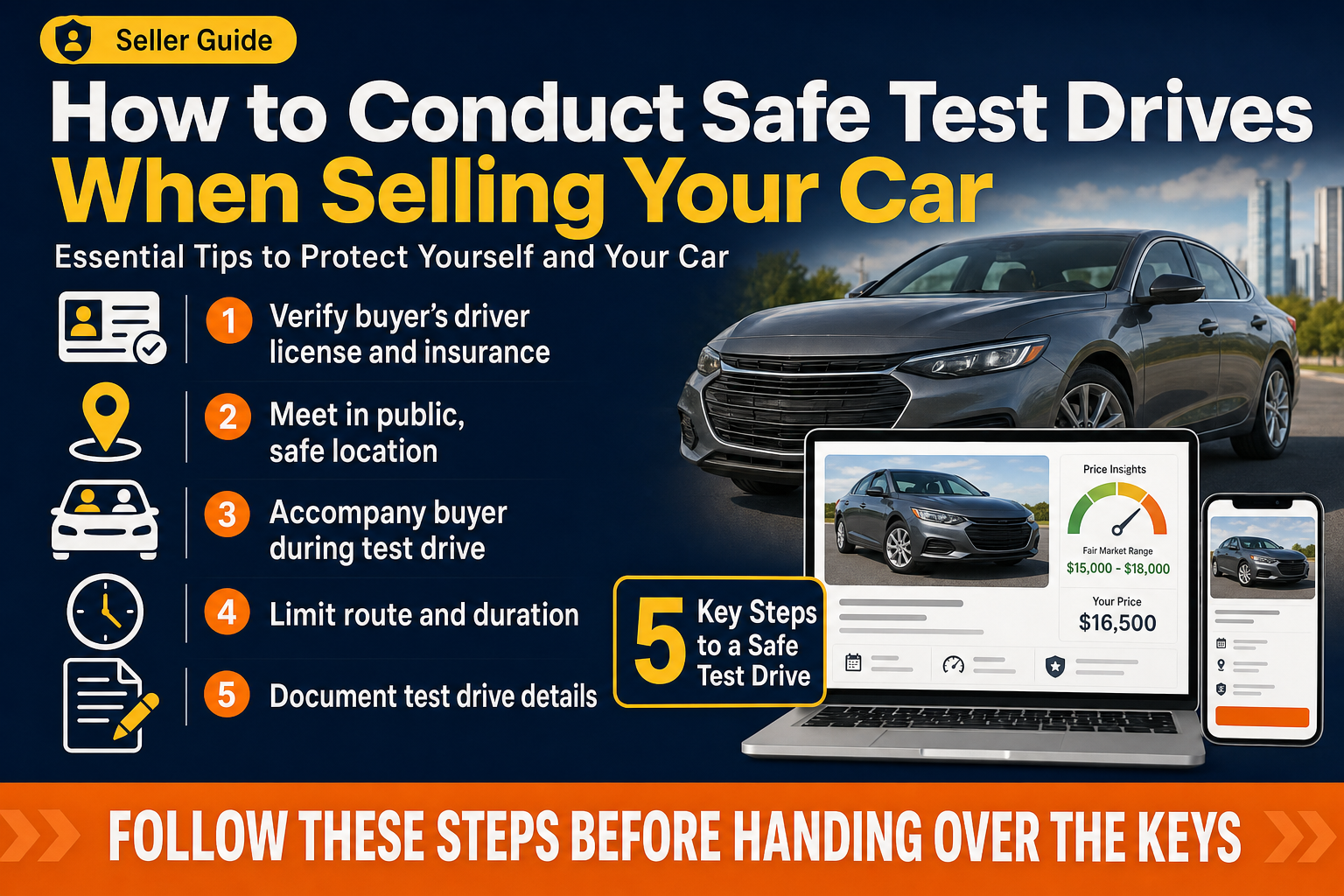
Mar 06 2026
How to Handle Test Drives Safely When Selling Your Car Privately
Allowing potential buyers to test drive your car is a crucial step in a private sale, but it comes with safety and liability risks. Knowing how to properly prepare and manage test drives can protect you and ensure a smooth transaction. This guide covers essential safety tips, verification steps, and best practices to follow before, during, and after the test drive. We’ll also highlight common pitfalls sellers encounter and how to avoid them.
T. K.
Read Article →