


How to Handle Test Drives Safely When Selling Your Car Privately
Allowing potential buyers to test drive your car is a crucial step in a private sale, but it comes with safety and liability risks. Knowing how to properly prepare and manage test drives can protect you and ensure a smooth transaction.
This guide covers essential safety tips, verification steps, and best practices to follow before, during, and after the test drive. We’ll also highlight common pitfalls sellers encounter and how to avoid them.
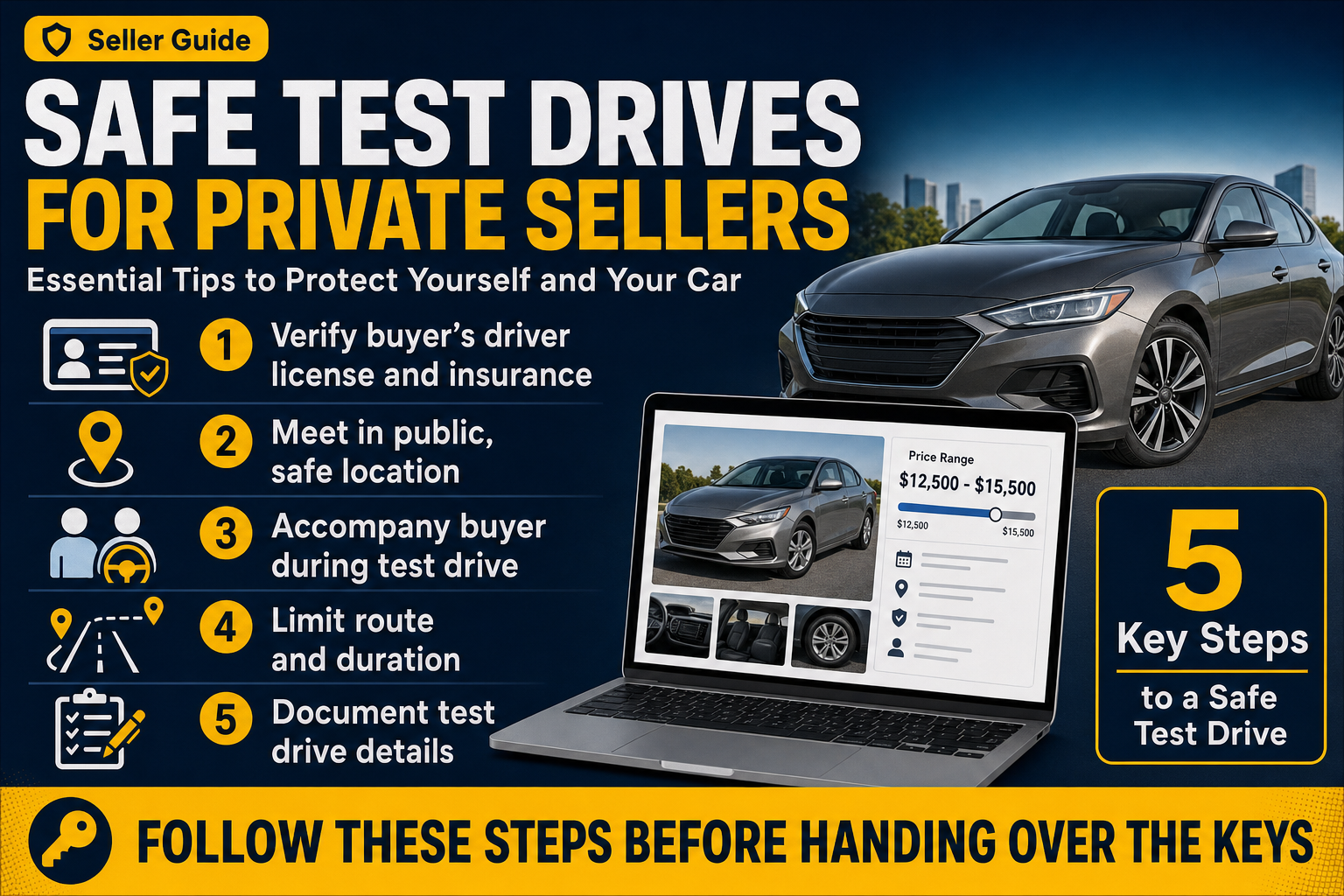
Safe and Effective Test Drive Tips for Private Sellers
When selling a car privately, a test drive often serves as the buyer’s chance to confirm the vehicle’s condition and performance. However, letting strangers drive your car can expose you to risks such as accidents, theft, or disputes. Here’s how to handle test drives safely and confidently.
Step 1: Screen Potential Buyers
Before scheduling a test drive, ask preliminary questions to gauge the buyer’s seriousness. Request a valid driver’s license and proof of insurance. Verify the driver’s identity by checking the license for authenticity and expiration. This step is crucial to ensure you are not handing over your keys to someone who might misuse the vehicle. In the United States, verifying the license not only confirms identity but also confirms the buyer is legally permitted to drive. Additionally, asking for proof of insurance protects you in the event of an accident during the test drive.
Step 2: Meet in a Safe Location
Arrange to meet potential buyers in a public, well-lit area such as a busy shopping center parking lot or near a police station during daylight hours. Avoid meeting at your home or in isolated spots to reduce personal safety risks. Public areas with surveillance cameras also discourage criminal behavior and provide added security.
Step 3: Prepare Your Vehicle
Ensure your car is clean and mechanically sound before the test drive. Remove all personal belongings and valuables to avoid loss or theft. Double-check that all lights, tires, brakes, and signals are functioning properly. A well-maintained car not only impresses buyers but also reduces the risk of breakdowns or accidents during the test drive.
Step 4: Accompany the Driver
Always ride with the buyer during the test drive. This allows you to monitor their driving behavior, answer questions, and provide useful information about the car’s features and history. Accompanying the buyer also discourages reckless driving or theft. If you feel uncomfortable at any point, trust your instincts and end the test drive immediately.
Step 5: Limit the Test Drive Route and Time
Plan a specific route that includes a variety of driving conditions (e.g., city streets, highway) but keep it short and familiar. Setting a clear time limit—typically around 10 to 15 minutes—helps maintain control of the situation. Inform the buyer about the planned route and duration beforehand to set expectations and avoid surprises.
Step 6: Document the Test Drive
Record the buyer’s driver’s license number, insurance details, and the date and time of the test drive. Some sellers ask the buyer to sign a simple test drive agreement that outlines responsibilities and liabilities. While not legally required, this document can help protect you in case of accidents or disputes. Keep a copy for your records, and consider taking a photo of the buyer’s license for additional security.
Additional Safety Tips for Private Sellers:
- Never hand over the car keys without first confirming the buyer’s credentials.
- Keep your phone charged and accessible during the test drive in case of emergencies.
- Inform a trusted friend or family member about the test drive appointment and share the buyer’s information.
- Trust your instincts—if something feels off about the buyer or the situation, do not proceed with the test drive.
- Consider meeting during business hours when more people are around.
By following these steps, you reduce risks and create a professional environment that builds buyer trust and helps close your sale successfully. Remember, the goal is not just to sell your car but to do so in a way that protects your safety and legal interests.
For more guidance on selling your car in the US market, including how to write effective listings, negotiate prices, and finalize paperwork, visit LazyChimp.com for expert tips and resources.
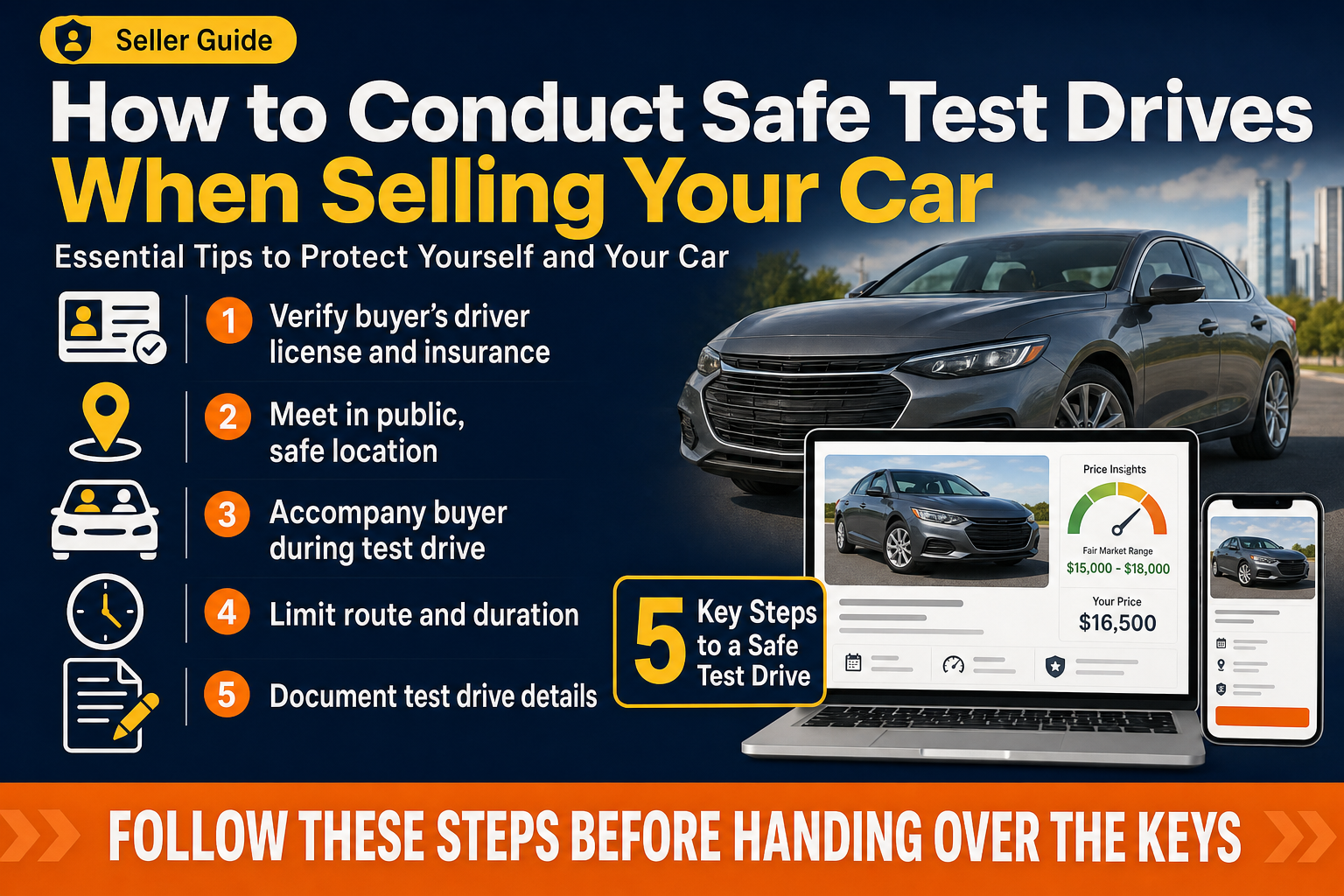
Handling Special Test Drive Situations and Legal Considerations
Once you master the basics of safe test drives, you should also be prepared for less common scenarios and legal questions that might arise. This section covers what to do if a buyer requests an extended test drive or if an accident occurs during the drive.
Pro tip: Never let a potential buyer test drive your car without verifying their driver’s license and insurance first. This single step prevents most legal and safety issues sellers face.
Here are some additional considerations for test drives in private car sales:
- Extended or Overnight Test Drives: Some buyers may request longer test drives or even overnight use. Be cautious with these requests. If you consider allowing it, require a signed agreement outlining responsibilities, and verify insurance coverage for the extended period.
- Accidents During Test Drives: If an accident happens, remain calm and exchange insurance and contact information with the buyer. Report the incident to your insurance company promptly. Documentation taken before the drive, such as license and insurance details, will support your case.
- Insurance Coverage: Your personal auto insurance often covers liability during test drives, but coverage details vary by policy. Contact your insurer to confirm what protection you have when others drive your car.
- Refusing Test Drives: Though test drives are common, you can refuse if you feel uncomfortable or unsafe. Clearly explain your reasons to maintain professionalism.
Always confirm any specific rules or requirements with your state DMV or insurance provider since regulations vary. Preparing well and staying cautious protects you and ensures the sale process goes smoothly.
Read Latest Articles
Simple, transparent process that gets you the best price for your car
Mar 06 2026
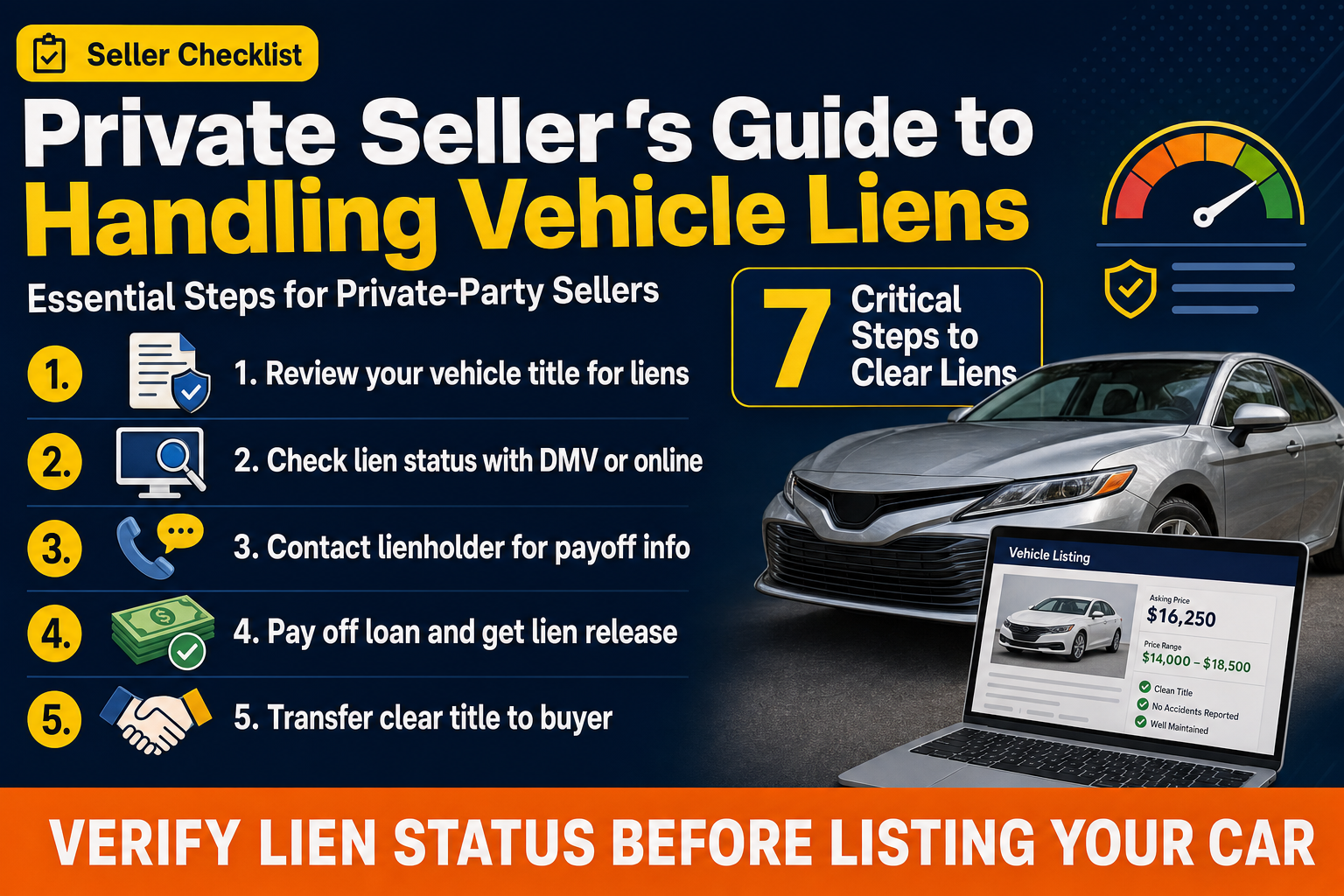
Private-Party Seller Checklist: How to Check for Liens Before Selling Your Car
Before selling your car privately, it’s essential to verify whether there are any liens on your vehicle. A lien means a lender or creditor has a legal claim on your car until a debt is paid off, which can complicate or invalidate your sale if not addressed. This checklist walks you through how to find out if your car has liens, what steps to take if liens exist, and how to clear them so you can sell your vehicle smoothly and legally.
T. K.
Read Article →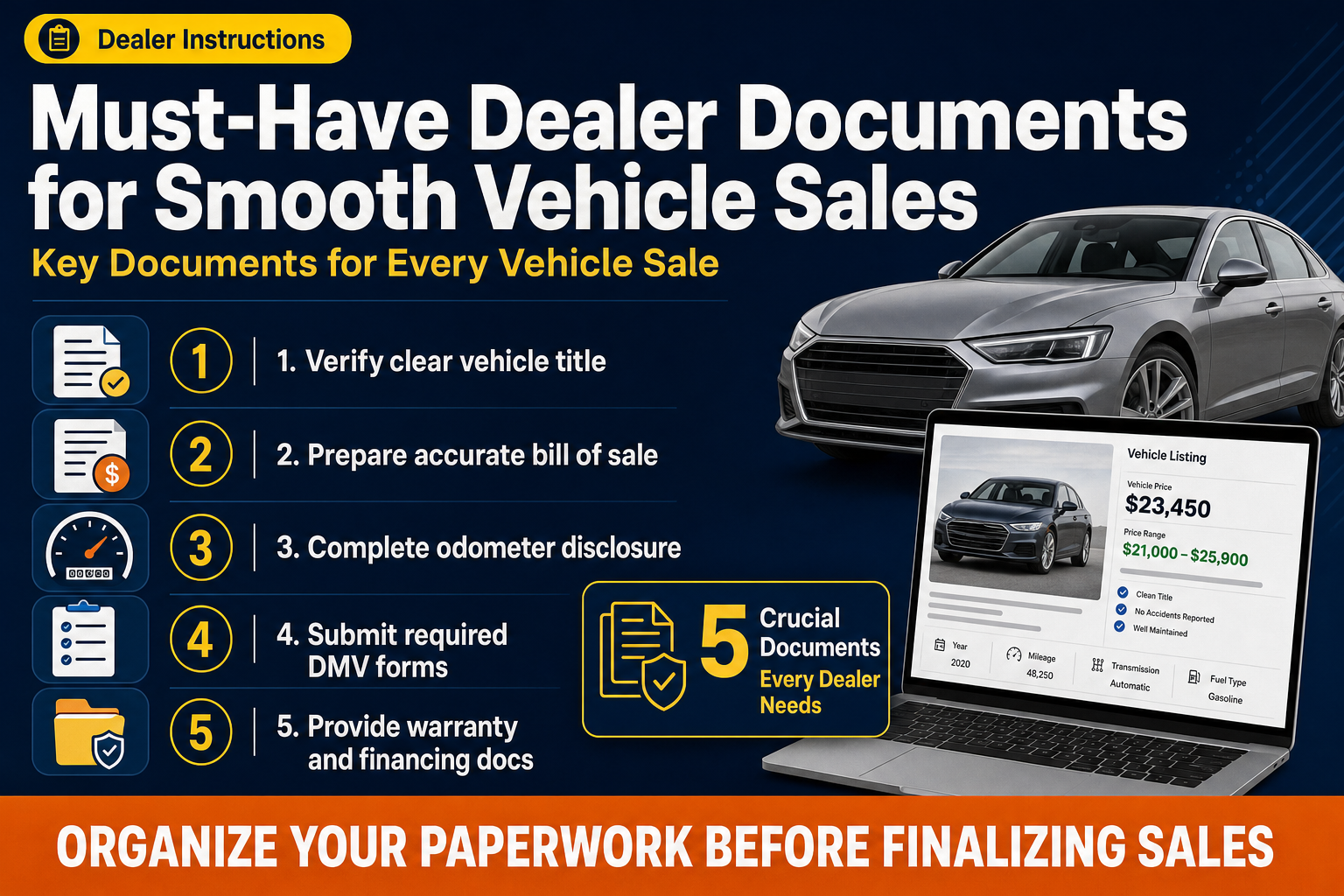
Mar 06 2026
Dealer Paperwork Essentials: What Documents You Must Prepare for Every Vehicle Sale
As a car dealer, handling paperwork accurately and efficiently is critical to closing sales and staying compliant with state regulations. Missing or incomplete documents can delay transactions or lead to legal issues. This article breaks down the essential documents dealers must prepare for every vehicle sale, including titles, bills of sale, disclosures, and DMV forms. We also cover best practices for organizing paperwork and avoiding common mistakes that slow down sales.
T. K.
Read Article →
Mar 06 2026
How to Handle Test Drives Safely When Selling Your Car Privately
Allowing potential buyers to test drive your car is a crucial step in a private sale, but it comes with safety and liability risks. Knowing how to properly prepare and manage test drives can protect you and ensure a smooth transaction. This guide covers essential safety tips, verification steps, and best practices to follow before, during, and after the test drive. We’ll also highlight common pitfalls sellers encounter and how to avoid them.
T. K.
Read Article →