


Essential Vehicle History Reports Every US Seller Should Provide
Selling your car privately? One of the most powerful tools to build trust and attract buyers is providing a detailed vehicle history report. These reports offer transparency about your car’s past — including accidents, title status, service records, and more — that buyers urgently want to know before making an offer.
In this guide, you’ll learn exactly which vehicle history reports are important for US sellers, how to obtain them, and how to present this information effectively in your listings. We’ll also cover common pitfalls sellers face when they skip this step and how LazyChimp’s platform helps you showcase history reports to close sales faster.
Ready to boost buyer confidence and sell smarter? Let’s dive into the must-have vehicle history documentation every private party seller should provide.
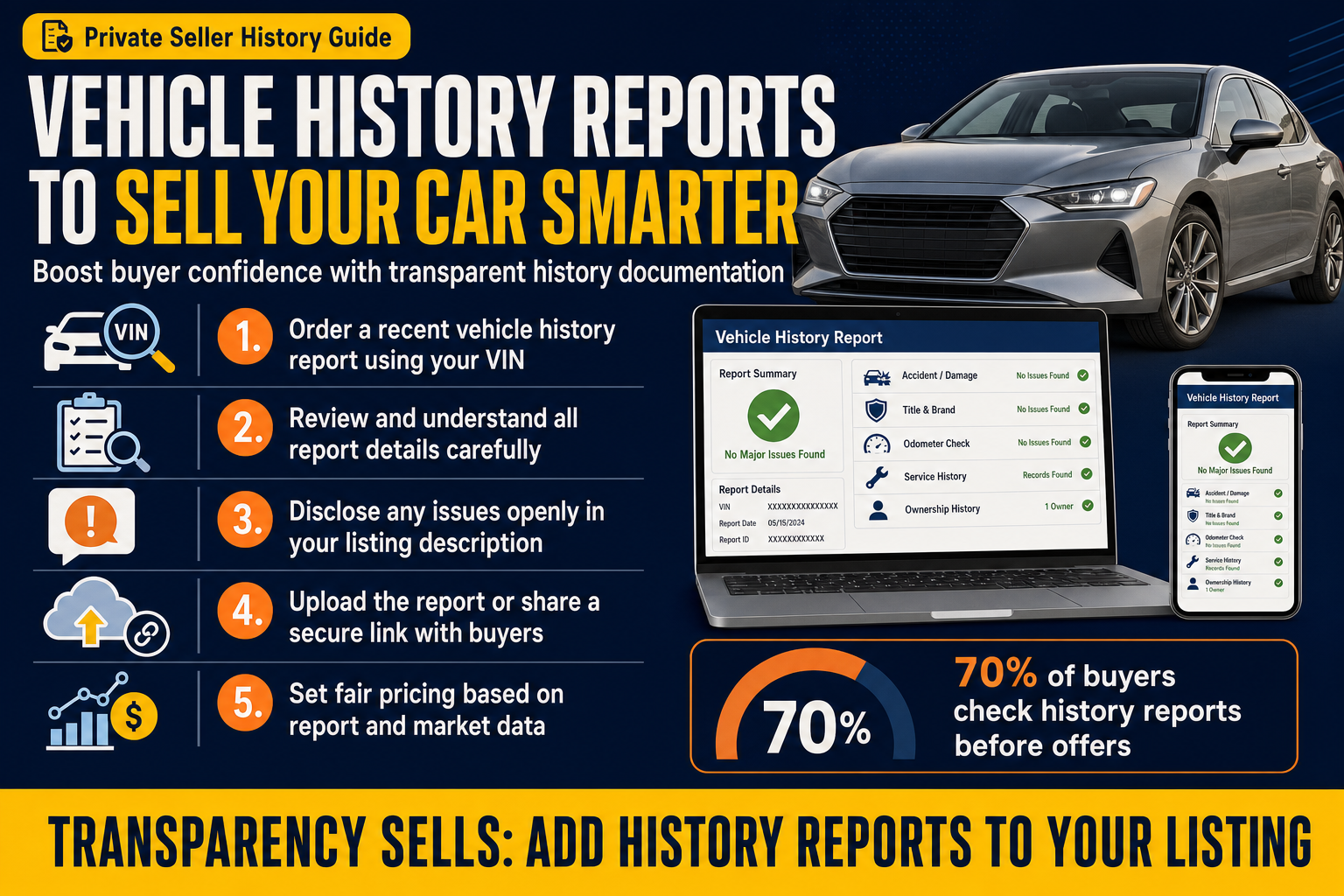
Why and How to Provide Vehicle History Reports When Selling Your Car
When selling a car privately in the US, transparency is key. Buyers want to know the full story behind your vehicle before committing their money. Vehicle history reports serve as a trusted source of information that can reveal important details like past accidents, odometer readings, title issues, and maintenance records. Providing these reports upfront can set your listing apart, reduce buyer hesitation, and speed up the selling process.
Types of Vehicle History Reports: Several providers offer comprehensive reports, with Carfax and AutoCheck being the most popular. These reports typically include:
- Accident History: Records of reported collisions or damage, which help buyers assess the safety and condition of the vehicle.
- Title Status: Checks for salvage, rebuilt, or flood titles that could affect the car’s value or insurability.
- Odometer Verification: Confirms mileage accuracy to spot rollback attempts, a common concern that can significantly impact price.
- Service and Maintenance Records: Shows routine upkeep and repairs, indicating how well the car has been cared for over time.
- Ownership History: Number of previous owners and registration states, which can give insight into how the vehicle was used and cared for.
Providing these details upfront not only builds buyer trust but also helps you justify your asking price with documented proof.
How to Obtain Vehicle History Reports: As a seller, you can purchase reports directly from providers’ websites using your car’s 17-digit VIN (Vehicle Identification Number). Here are some actionable tips for obtaining the best reports:
- Visit official sites like Carfax or AutoCheck.
- Consider buying multiple reports or packages if you plan to sell several vehicles or want ongoing updates.
- Check for any free or discounted reports through your insurance company or dealership, as some partners provide complimentary access.
- Always use the exact VIN from your vehicle’s dashboard or driver’s side door jamb to ensure accurate results.
Practical Steps to Include Reports in Your Listing: Once you have your vehicle history report, follow these steps to maximize its impact:
- Order a recent vehicle history report to ensure up-to-date information.
- Review the report thoroughly and be prepared to explain any entries transparently to potential buyers.
- Upload the report as a PDF or provide a secure link in your online listing on platforms like LazyChimp.com.
- Mention key points from the report in your description, such as a clean title, no accidents, or recent service milestones.
- Highlight any positive maintenance history or upgrades to further reassure buyers.
Common Seller Mistakes to Avoid: Many private sellers inadvertently hurt their chances by skipping or mishandling vehicle history reports:
- Failing to provide any report, which creates suspicion and causes buyers to hesitate or walk away.
- Using outdated or incomplete reports that don’t reflect recent accidents or repairs.
- Withholding negative information, which can backfire if discovered later and cause deals to fall through.
- Not verifying the accuracy of the report or correcting errors before listing.
By avoiding these pitfalls, you create a smoother transaction and build stronger buyer confidence.
Why LazyChimp Sellers Benefit from History Transparency: LazyChimp’s platform is designed to help you sell smarter by integrating vehicle history reports directly into your listing. This feature offers several advantages:
- Easily attach comprehensive history reports so buyers can verify facts on their own time.
- Reduce time-consuming questions and negotiations by providing upfront transparency.
- Stand out from dealer lots and other private listings by showcasing your vehicle’s clean history and maintenance.
- Leverage transparent pricing combined with detailed history to attract more serious buyers and potentially receive higher offers.
In essence, LazyChimp empowers you to close sales faster and with greater confidence by making vehicle history a key part of your sales strategy.
In summary, providing a thorough vehicle history report is a simple yet highly effective way to build trust with buyers and streamline your private party car sale. It’s a small upfront investment that pays off in saved time, smoother negotiations, and better sale prices. Remember, buyers want honesty and clarity — offering a detailed vehicle history report is one of the best ways to deliver both and ensure your car stands out in the competitive US market.
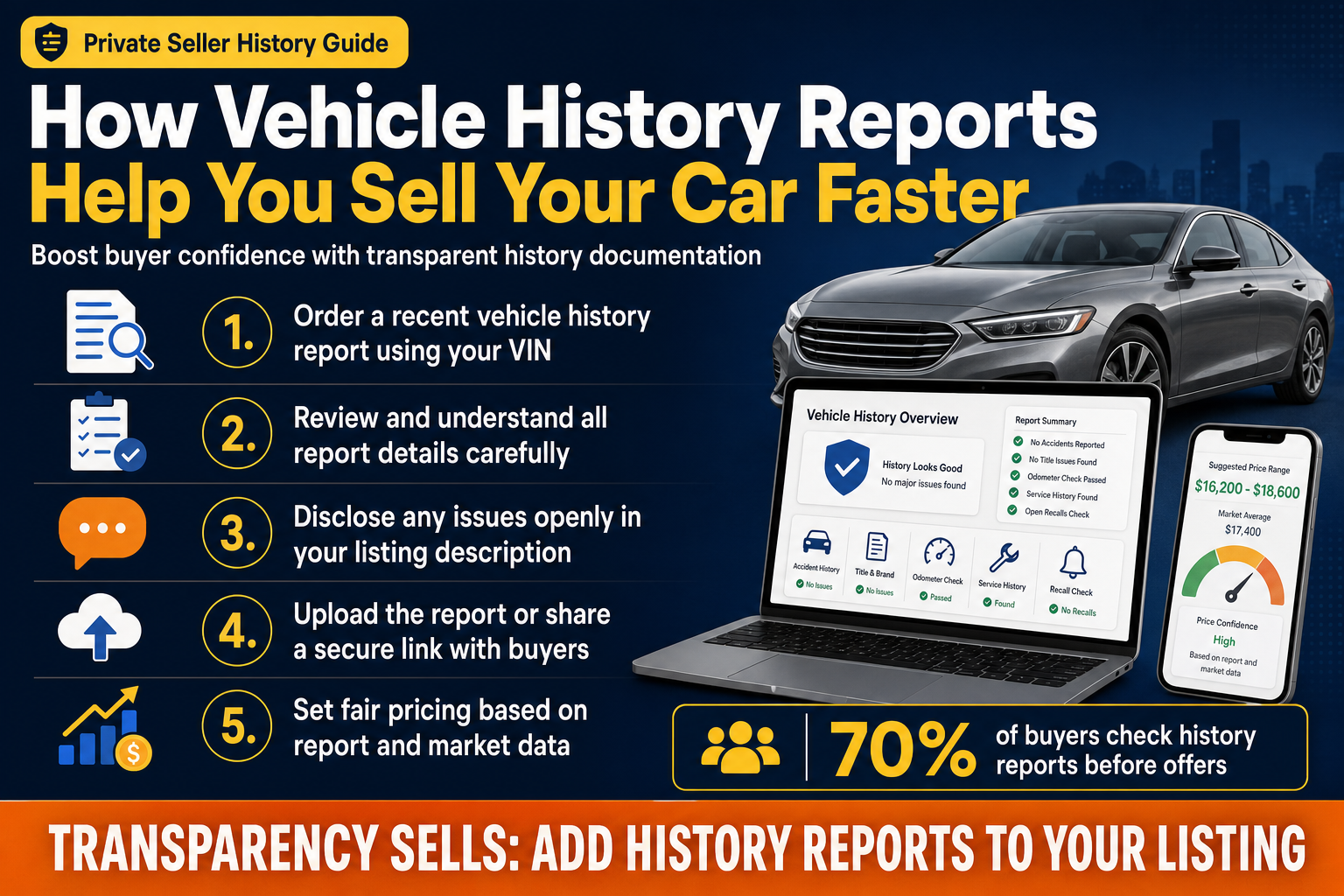
Next-Level Tips for Using Vehicle History Reports to Sell Faster
Now that you understand the importance of vehicle history reports, let’s explore advanced strategies for using these documents to your advantage. This section covers how to address report findings honestly, leverage positive history highlights, and integrate reports into your overall sales approach to maximize buyer interest.
Pro tip: Always order a fresh vehicle history report before listing and highlight the cleanest, most reassuring details upfront. Transparency converts cautious buyers into serious offers.
Here are some best practices for leveraging vehicle history reports effectively:
- Review the report carefully: Understand every detail so you can confidently answer buyer questions and explain any negative entries.
- Disclose issues openly: If your car has a minor accident history or title note, proactively mention it and provide context. Buyers appreciate honesty and it reduces the risk of surprises during inspections.
- Highlight maintenance records: Upload service documentation that shows regular oil changes, brake replacements, or recent repairs to reinforce your car’s reliability.
- Use reports in your listing description: Add a dedicated 'Vehicle History' section summarizing key facts like "No accidents reported" or "Single owner with full service records."
- Combine with transparent pricing: Price your car fairly based on comparable vehicles with similar history and use LazyChimp’s pricing tools to set competitive, realistic expectations.
Integrating vehicle history reports into your sales process builds immediate trust and can set you apart from other sellers who omit this critical step. When buyers know you’ve done the homework and shared everything upfront, they’re more likely to view your vehicle as a safe, smart purchase.
Ready to get started? Browse current listings on LazyChimp to see examples of sellers who successfully use history reports, or create your own listing today with attached documentation for maximum impact.
Read Latest Articles
Simple, transparent process that gets you the best price for your car
Mar 06 2026
Essential Vehicle History Reports Every US Seller Should Provide
Selling your car privately? One of the most powerful tools to build trust and attract buyers is providing a detailed vehicle history report. These reports offer transparency about your car’s past — including accidents, title status, service records, and more — that buyers urgently want to know before making an offer. In this guide, you’ll learn exactly which vehicle history reports are important for US sellers, how to obtain them, and how to present this information effectively in your listings. We’ll also cover common pitfalls sellers face when they skip this step and how LazyChimp’s platform helps you showcase history reports to close sales faster. Ready to boost buyer confidence and sell smarter? Let’s dive into the must-have vehicle history documentation every private party seller should provide.
Anonymous
Read Article →
Mar 06 2026
How to Price Your Used Car Competitively for a Quick Private Sale
Selling your used car privately can be a rewarding way to get the best value, but setting the right price is crucial. Price it too high, and you risk scaring away potential buyers; price it too low, and you might leave money on the table.This guide walks you through practical steps to research and establish a competitive price for your vehicle. You'll learn how to balance market data, condition, and timing to attract serious buyers without undervaluing your car.By the end, you'll understand common pricing pitfalls to avoid and how tools like LazyChimp’s transparent pricing can give you an edge in today’s US car market.
Anonymous
Read Article →
Mar 06 2026
How to Price Your Used Car Competitively for a Faster Private Sale
Selling your car privately can be profitable, but pricing it right is crucial to attract buyers quickly. Overpricing means your vehicle sits on the market, while underpricing leaves money on the table. Understanding how to set a competitive price is key to a successful sale. In this guide, you will learn how to research market values, factor in your car’s condition, mileage, and location, and adjust your asking price strategically. We’ll also cover common pricing mistakes sellers make and share tips on how to leverage LazyChimp’s transparent pricing tools to your advantage. Whether you're selling a sedan, SUV, or pickup, this article provides actionable steps to price your used car competitively and sell faster without sacrificing value.
LazyChimp.Com
Read Article →