


How to Price Your Used Car Competitively for a Faster Private Sale
Selling your car privately can be profitable, but pricing it right is crucial to attract buyers quickly. Overpricing means your vehicle sits on the market, while underpricing leaves money on the table. Understanding how to set a competitive price is key to a successful sale.
In this guide, you will learn how to research market values, factor in your car’s condition, mileage, and location, and adjust your asking price strategically. We’ll also cover common pricing mistakes sellers make and share tips on how to leverage LazyChimp’s transparent pricing tools to your advantage.
Whether you're selling a sedan, SUV, or pickup, this article provides actionable steps to price your used car competitively and sell faster without sacrificing value.
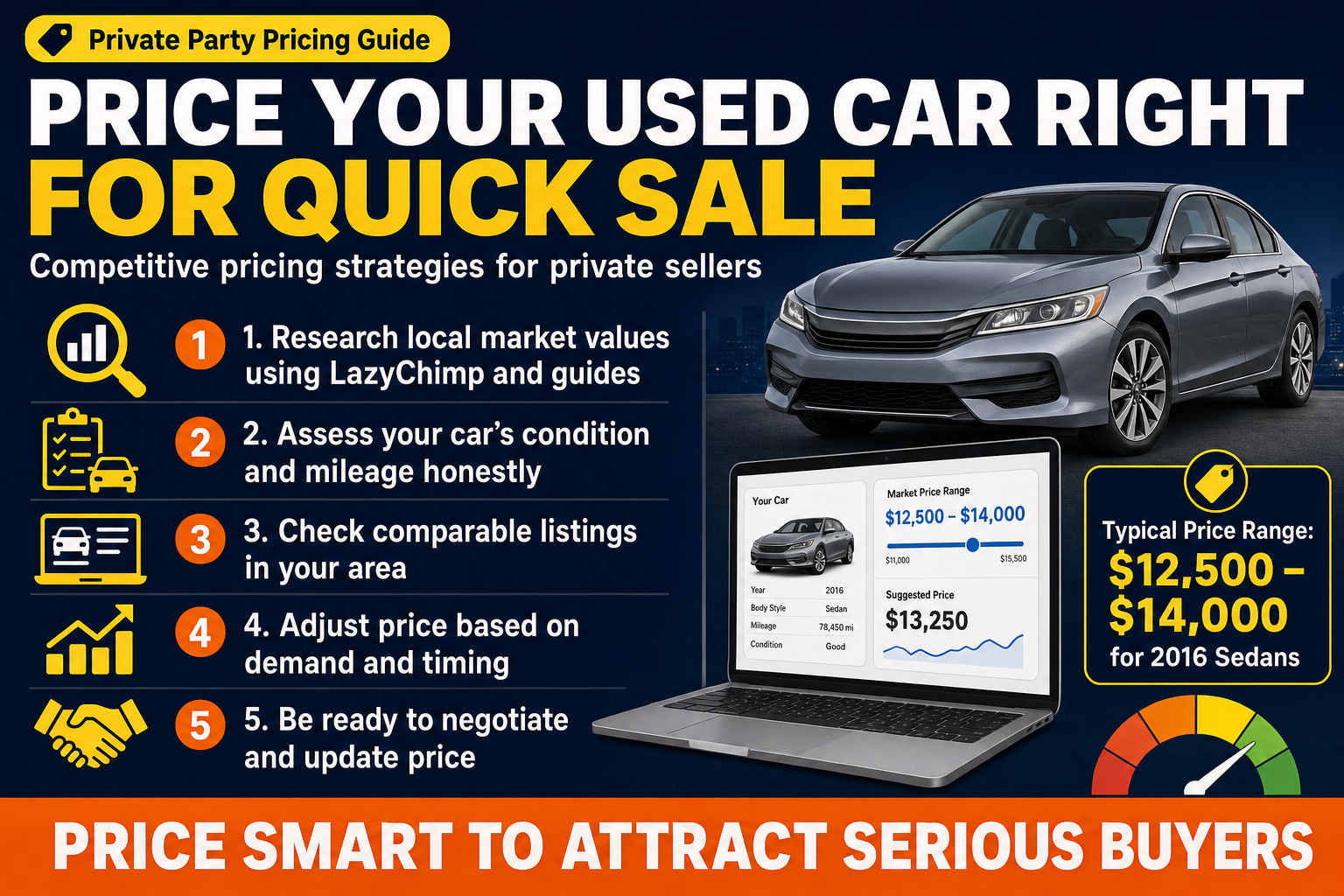
Step-by-step guide to setting the right asking price for your used car
Understanding Market Value
Before setting your car’s price, it’s essential to know its current market value. Market value reflects what buyers are willing to pay given your car’s make, model, year, mileage, and condition. Use trusted resources like Kelley Blue Book, Edmunds, and NADA Guides to get an initial value range. These tools provide valuable estimates based on national data, but keep in mind they may not fully reflect local market nuances.
LazyChimp also provides transparent pricing data from real private party and dealer listings in your specific area, giving you a more accurate and localized idea of what similar vehicles are actually selling for. Leveraging this localized data can help you avoid common pitfalls of relying solely on national averages and ensure your price is competitive within your market.
Assess Your Car’s Condition and Mileage
Once you understand the general market value, it’s time to take an honest look at your car’s condition. This includes both cosmetic and mechanical aspects. Has the vehicle been regularly maintained? Are there any dents, scratches, or interior wear? Has it ever been in an accident? Each of these factors can significantly affect your car’s value.
Mileage is another critical factor. In the US market, a vehicle with lower mileage typically commands a higher price because it suggests less wear and tear. Conversely, very high mileage can reduce the car’s appeal. For example, a sedan with 60,000 miles will likely fetch a better price than the same model with 120,000 miles. Be realistic and transparent about the mileage and condition to build buyer trust and avoid wasted time.
Check Comparable Listings
To fine-tune your asking price, browse online listings for vehicles similar to yours. Focus on these key points:
- Year, make, and model: Look for the same generation and trim level to ensure a fair comparison.
- Mileage: Find cars with mileage close to yours, as this greatly impacts price.
- Condition: Compare cosmetic and mechanical condition to gauge how your car stacks up.
- Location: Regional demand varies widely; a truck in Texas may sell for more than the same truck in New York.
Observe the asking prices and note how long these vehicles have been on the market. If many similar cars remain unsold for weeks or months, it could indicate that those prices are too high. Conversely, if vehicles are selling quickly, you might have room to price your car competitively on the higher end.
Adjust Price Based on Demand and Timing
Seasonality plays a big role in car sales. For example, convertibles tend to sell better in spring and summer months, while 4WD trucks and SUVs often see increased demand during fall and winter in colder regions. Understanding these trends helps you time your sale strategically.
If you’re not in a rush, consider pricing your car at the higher end of the market range to maximize your return and be prepared for negotiations. However, if you want a faster sale, pricing slightly below the average market value can attract more buyers and reduce your listing time.
Common Pricing Mistakes to Avoid
- Ignoring local market trends: National guides provide a baseline but may not capture localized demand fluctuations. Always supplement with local data.
- Setting a price based on emotional attachment: It’s easy to overvalue your car because of personal memories or recent repairs, but buyers focus solely on objective factors.
- Not factoring in fees and taxes: Buyers consider the total cost of ownership, so ensure your price is competitive when including registration fees, taxes, and any transfer costs.
- Failing to update price: If your car sits unsold for a few weeks, don’t be afraid to lower the price incrementally to reinvigorate interest.
Use LazyChimp Pricing Tools
LazyChimp offers a unique advantage for private sellers by providing transparent access to real transaction prices and current listings. This data-driven approach helps you price your car with confidence based on actual market activity rather than estimates alone.
- See the difference in pricing between private party sales and dealer listings to position your car competitively.
- View recent sale prices in your ZIP code to understand what buyers nearby are paying.
- Adjust your asking price dynamically as market conditions change, ensuring you stay in line with current demand.
By leveraging LazyChimp’s transparent pricing tools, you can set a competitive asking price that attracts serious buyers quickly. This approach not only increases your chances of a timely sale but also helps you maximize the value you receive from your used car.
Remember, pricing your car competitively is an ongoing process. Stay patient, monitor local market trends, and be ready to adjust your price as needed. With the right strategy and tools like LazyChimp, selling your used car privately in the US can be both profitable and efficient.
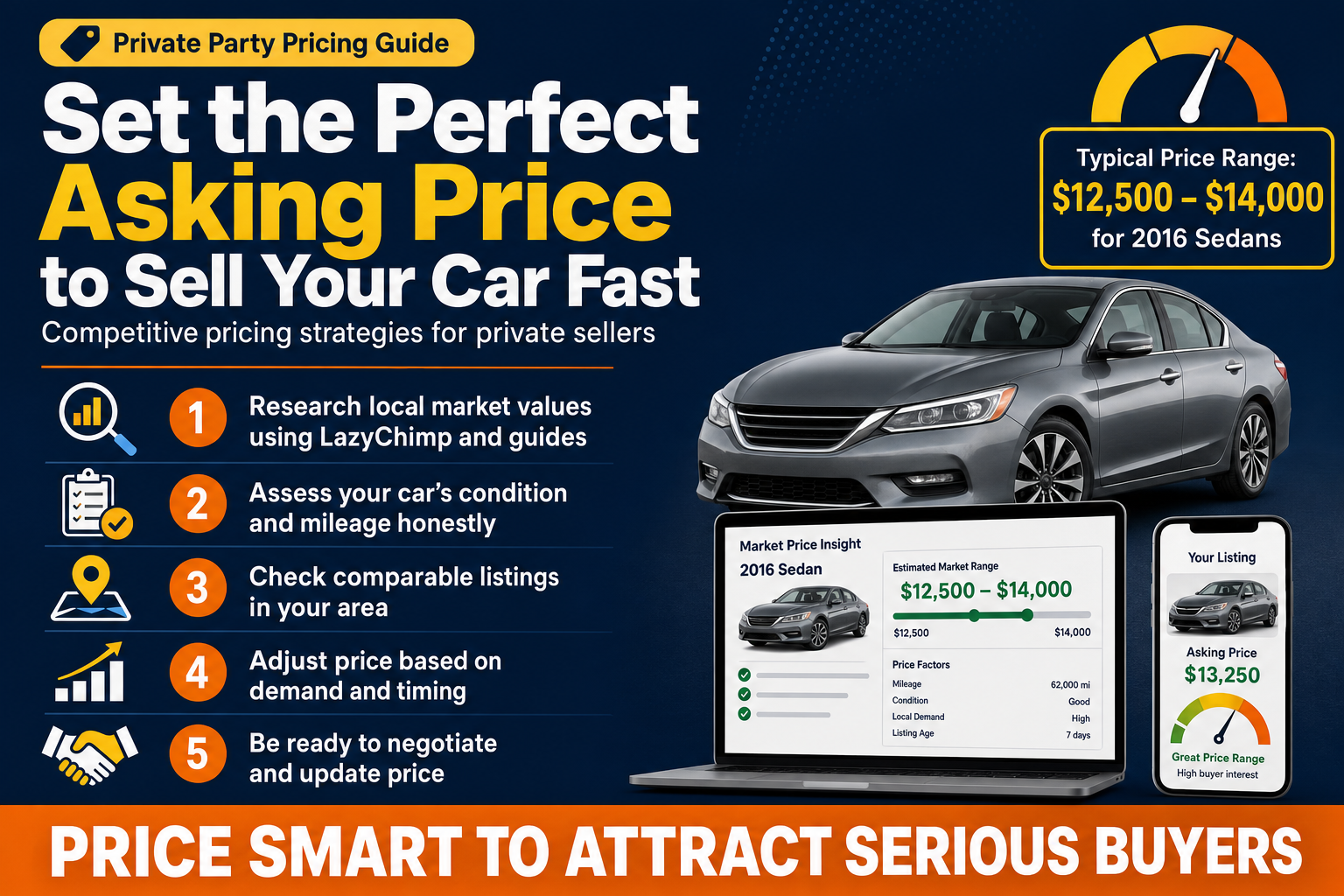
Advanced tips for pricing strategy and maximizing sale value
Once you understand the basics of competitive pricing, consider strategic adjustments to optimize your sale. This section dives deeper into pricing psychology, negotiation tactics, and timing your listing for maximum impact.
Pro tip: Combining accurate market data with flexible pricing strategies tailored to your goals ensures you attract serious buyers quickly while achieving a fair sale price.
1. Price Just Below Common Thresholds
Buyers often search within price brackets (e.g., under $10,000). Pricing your car just below these thresholds can increase visibility and interest.
2. Highlight Value-Added Features
Include recent maintenance records, new tires, or upgrades in your listing. These justify your asking price and can differentiate your car from others.
3. Be Open to Negotiation
Set your initial price slightly higher than your bottom line to leave room for bargaining. Most buyers expect some negotiation.
4. Time Your Listing
Post your car when demand is highest for your vehicle type. For example, SUVs and trucks tend to sell better in fall/winter, while convertibles peak in spring/summer.
5. Monitor and Adjust
If your car isn’t getting inquiries after 2-3 weeks, consider lowering the price incrementally. Use LazyChimp’s market insights to guide adjustments.
By applying these advanced tactics along with transparent pricing data available on LazyChimp, you position your car for a faster sale at a fair price. Explore current listings and start your pricing research today on LazyChimp.com to see how your vehicle stacks up in the market.
Read Latest Articles
Simple, transparent process that gets you the best price for your car
Mar 06 2026
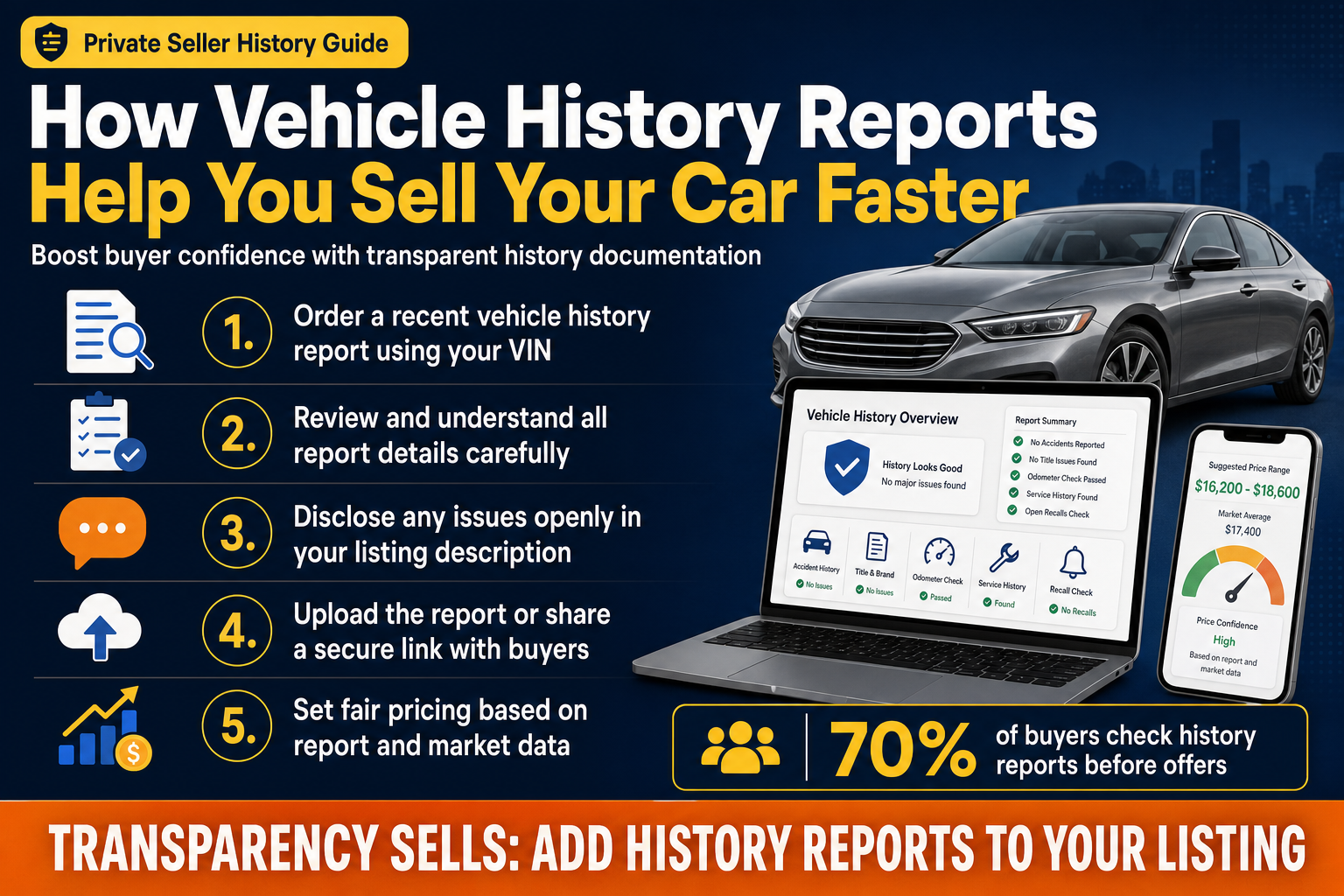
Essential Vehicle History Reports Every US Seller Should Provide
Selling your car privately? One of the most powerful tools to build trust and attract buyers is providing a detailed vehicle history report. These reports offer transparency about your car’s past — including accidents, title status, service records, and more — that buyers urgently want to know before making an offer. In this guide, you’ll learn exactly which vehicle history reports are important for US sellers, how to obtain them, and how to present this information effectively in your listings. We’ll also cover common pitfalls sellers face when they skip this step and how LazyChimp’s platform helps you showcase history reports to close sales faster. Ready to boost buyer confidence and sell smarter? Let’s dive into the must-have vehicle history documentation every private party seller should provide.
Anonymous
Read Article →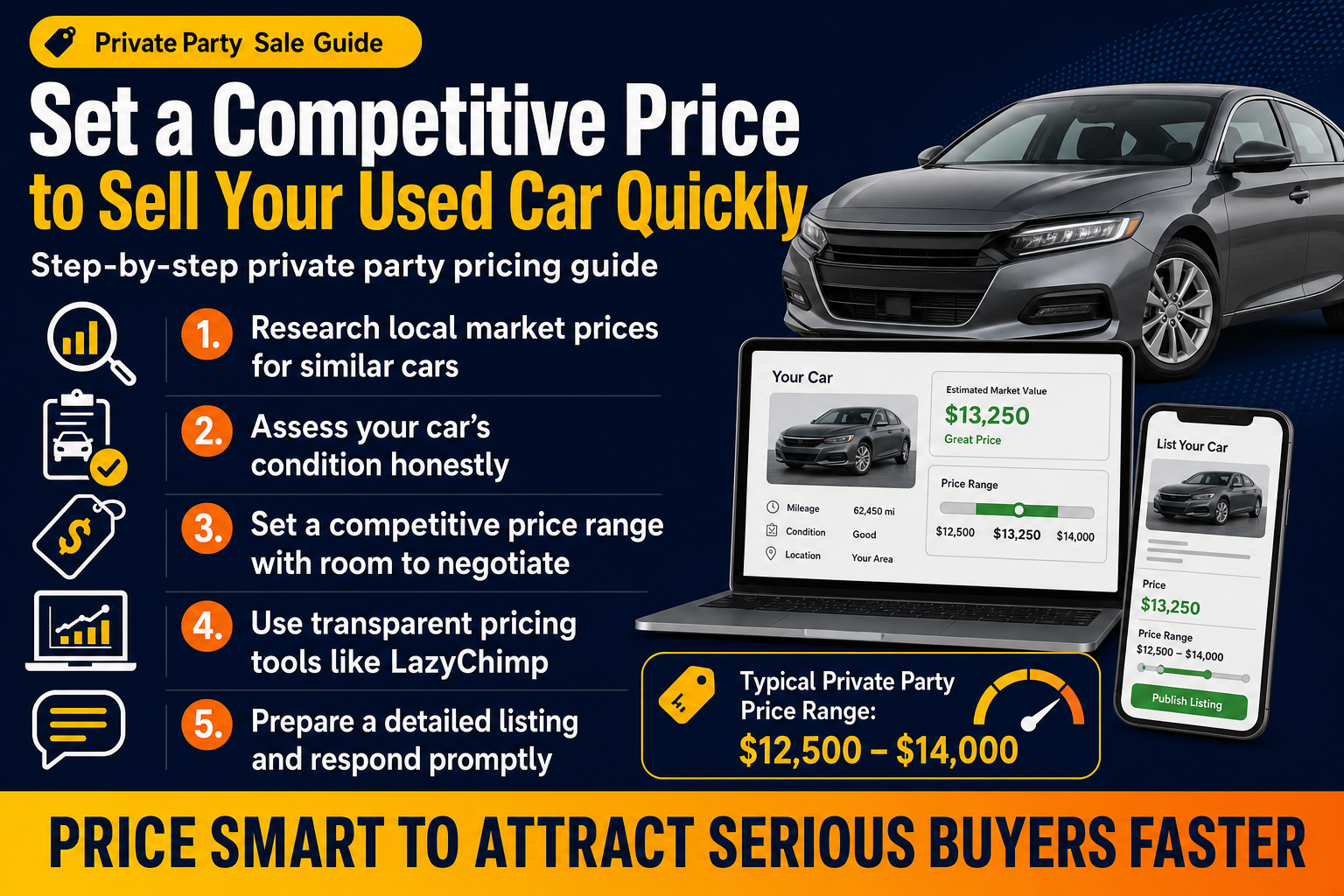
Mar 06 2026
How to Price Your Used Car Competitively for a Quick Private Sale
Selling your used car privately can be a rewarding way to get the best value, but setting the right price is crucial. Price it too high, and you risk scaring away potential buyers; price it too low, and you might leave money on the table.This guide walks you through practical steps to research and establish a competitive price for your vehicle. You'll learn how to balance market data, condition, and timing to attract serious buyers without undervaluing your car.By the end, you'll understand common pricing pitfalls to avoid and how tools like LazyChimp’s transparent pricing can give you an edge in today’s US car market.
Anonymous
Read Article →
Mar 06 2026
How to Price Your Used Car Competitively for a Faster Private Sale
Selling your car privately can be profitable, but pricing it right is crucial to attract buyers quickly. Overpricing means your vehicle sits on the market, while underpricing leaves money on the table. Understanding how to set a competitive price is key to a successful sale. In this guide, you will learn how to research market values, factor in your car’s condition, mileage, and location, and adjust your asking price strategically. We’ll also cover common pricing mistakes sellers make and share tips on how to leverage LazyChimp’s transparent pricing tools to your advantage. Whether you're selling a sedan, SUV, or pickup, this article provides actionable steps to price your used car competitively and sell faster without sacrificing value.
LazyChimp.Com
Read Article →