


How to Price Your Car Right: A Seller's Complete Pricing Guide
The single biggest mistake car sellers in Illinois make is pricing too high — and watching their listing sit unsold for months. The second biggest mistake is pricing too low and leaving money on the table. This guide teaches you how to find that perfect price point that attracts serious buyers fast.

The Psychology of Car Pricing: Why Your First Number Matters Most
Research consistently shows that cars priced near the median market value for their specifications sell 3–4 times faster than overpriced listings. And fast sales typically mean better prices, because the car hasn't been stigmatized by sitting on the market for weeks with repeated price cuts.

Step-by-Step: How to Calculate Your Car's Market Value
Follow this exact process used by professional car dealers and appraisers across Illinois to determine the right asking price for your vehicle.
A systematic pricing methodology for private car sellers in Illinois, covering market research, condition adjustment, mileage impact, and how to position your listing for maximum buyer interest.
Step 1: Research Active Listings for Your Exact Model
Search multiple car listing platforms. Search your exact car: make, model, year, trim level, and transmission type. Record the asking prices for at least 10–15 similar vehicles. This gives you the market range — from bargain-priced listings to high-end aspirational prices.
Step 2: Check Kelley Blue Book and Edmunds
Get a Private Party Value from Kelley Blue Book (kbb.com) and Edmunds for your specific vehicle. Enter the correct mileage, condition, and zip code. These tools provide Illinois-adjusted private party ranges that reflect your regional market. Your asking price should typically be at or slightly above KBB Private Party "Good" condition value.
Step 3: Adjust for Mileage
Mileage is one of the biggest factors in used car pricing. The average American drives approximately 12,000–15,000 miles per year. For every 5,000 miles above the average for the car's age, reduce your price by approximately 1–3%. A car with 90,000 miles that's 5 years old is carrying above-average mileage for its age and should be priced accordingly.
Step 4: Account for Illinois Winter Wear
Buyers in Illinois know that road salt, freeze-thaw cycles, and harsh winters accelerate rust and wear. Be honest about any rust on the undercarriage, wheel wells, or frame. A clean undercarriage on an Illinois car is a genuine selling point worth highlighting — and hidden rust discovered during a buyer inspection will cost you more in price concessions than disclosing it upfront.
Step 5: Add Value for Extras — but Realistically
Additional accessories, upgrades, or service records add value. However, buyers rarely pay full retail for aftermarket additions. A $1,500 aftermarket sound system might add $200–$400 to your asking price — not the full cost. New tires, a recent oil change, or a clean CARFAX report are more universally valued by buyers.
Step 6: Set Your Asking Price 5–10% Above Your Floor
Your floor price is the minimum you'll accept. Set your asking price 5–10% above your floor to give yourself negotiating room while remaining competitive. If your floor is $12,000, list at $12,800–$13,200. Never list so high that your car doesn't appear in buyer searches filtered by budget.
Step 7: Monitor and Adjust After 2 Weeks
If you've had fewer than 5 serious inquiries in the first two weeks, your price is likely 10–15% too high for your market. A small, strategic price reduction can dramatically increase visibility and buyer interest on platforms like CarGurus, which actively notifies watchers of price drops.
Read Latest Articles
Simple, transparent process that gets you the best price for your car
Mar 06 2026
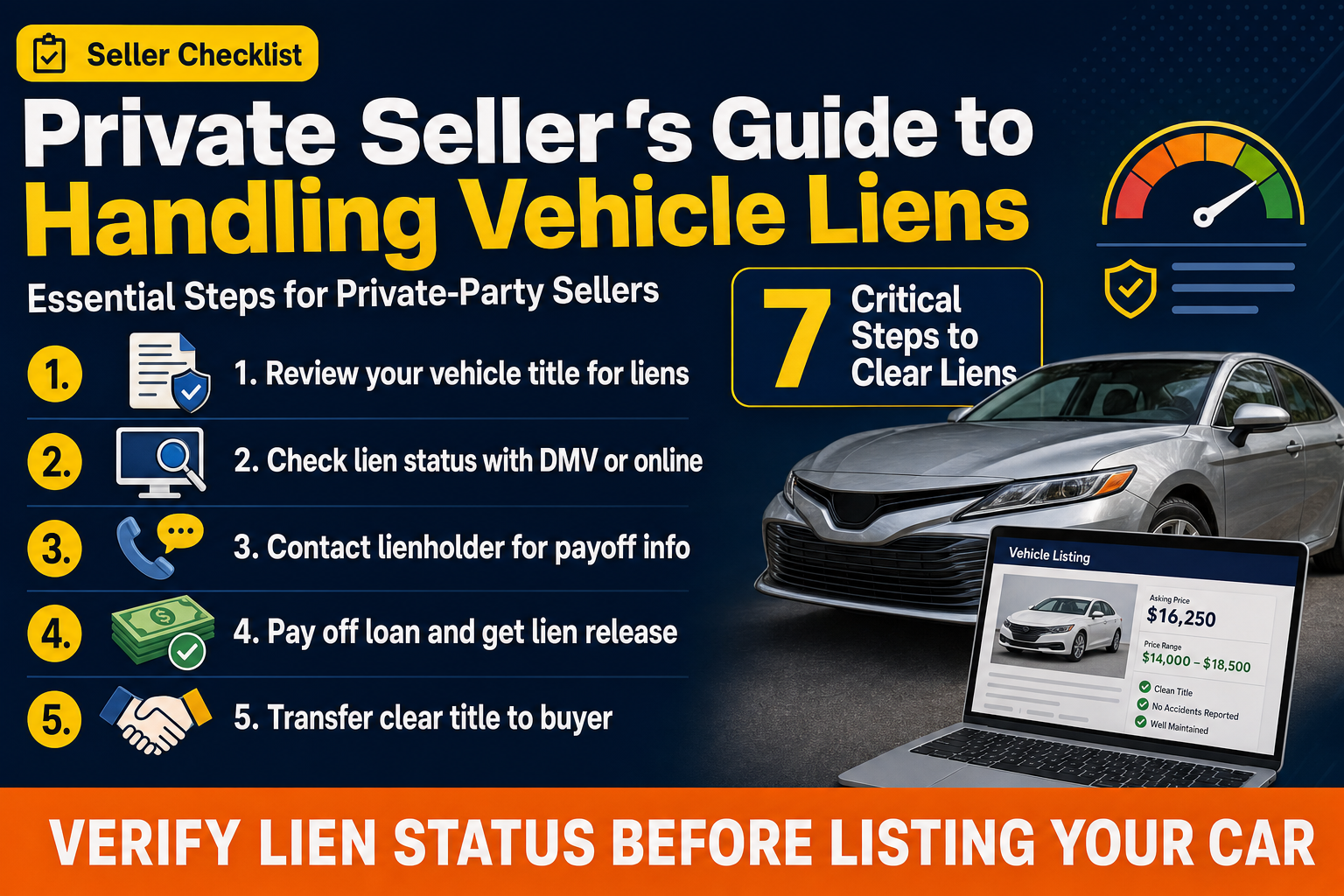
Private-Party Seller Checklist: How to Check for Liens Before Selling Your Car
Before selling your car privately, it’s essential to verify whether there are any liens on your vehicle. A lien means a lender or creditor has a legal claim on your car until a debt is paid off, which can complicate or invalidate your sale if not addressed. This checklist walks you through how to find out if your car has liens, what steps to take if liens exist, and how to clear them so you can sell your vehicle smoothly and legally.
T. K.
Read Article →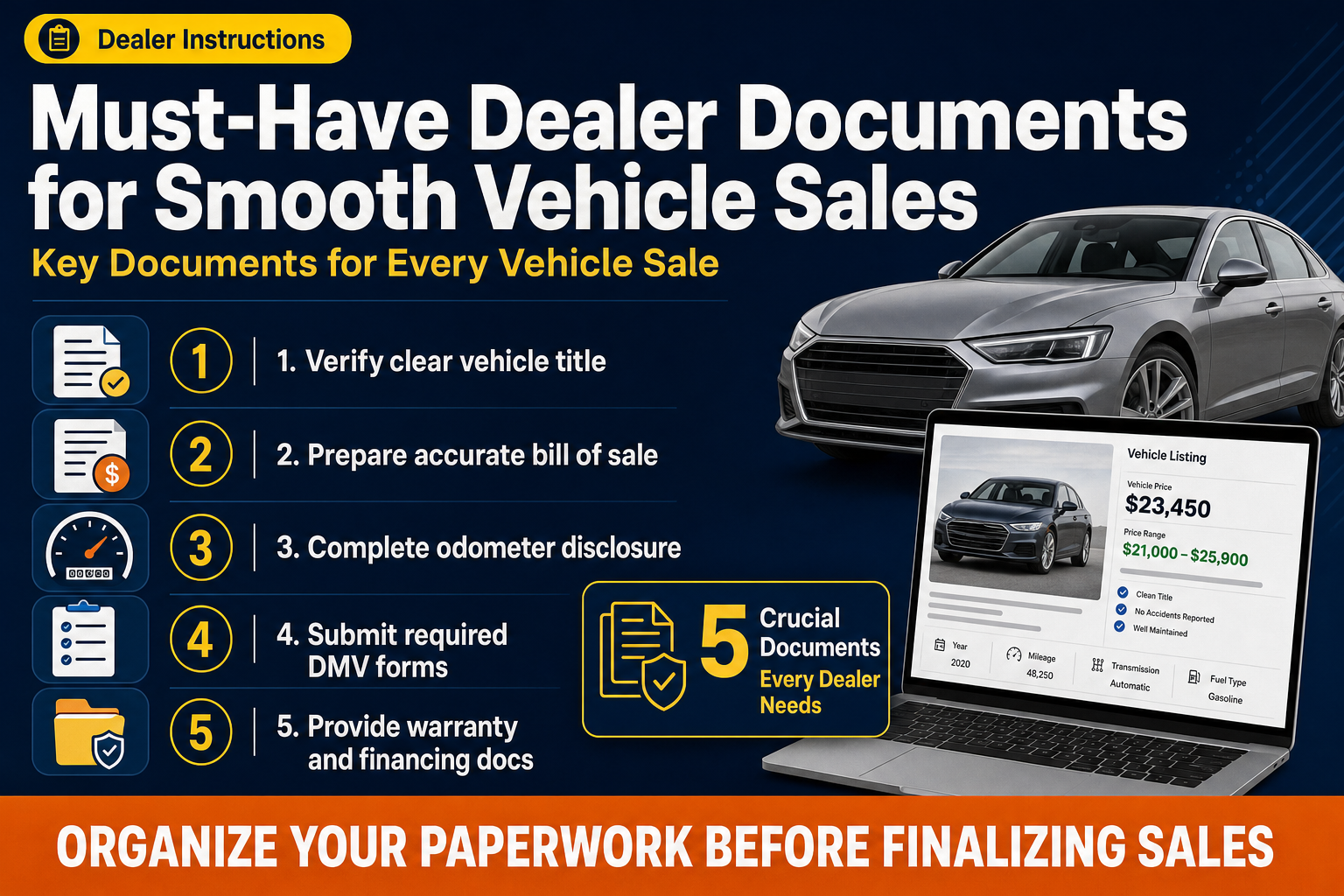
Mar 06 2026
Dealer Paperwork Essentials: What Documents You Must Prepare for Every Vehicle Sale
As a car dealer, handling paperwork accurately and efficiently is critical to closing sales and staying compliant with state regulations. Missing or incomplete documents can delay transactions or lead to legal issues. This article breaks down the essential documents dealers must prepare for every vehicle sale, including titles, bills of sale, disclosures, and DMV forms. We also cover best practices for organizing paperwork and avoiding common mistakes that slow down sales.
T. K.
Read Article →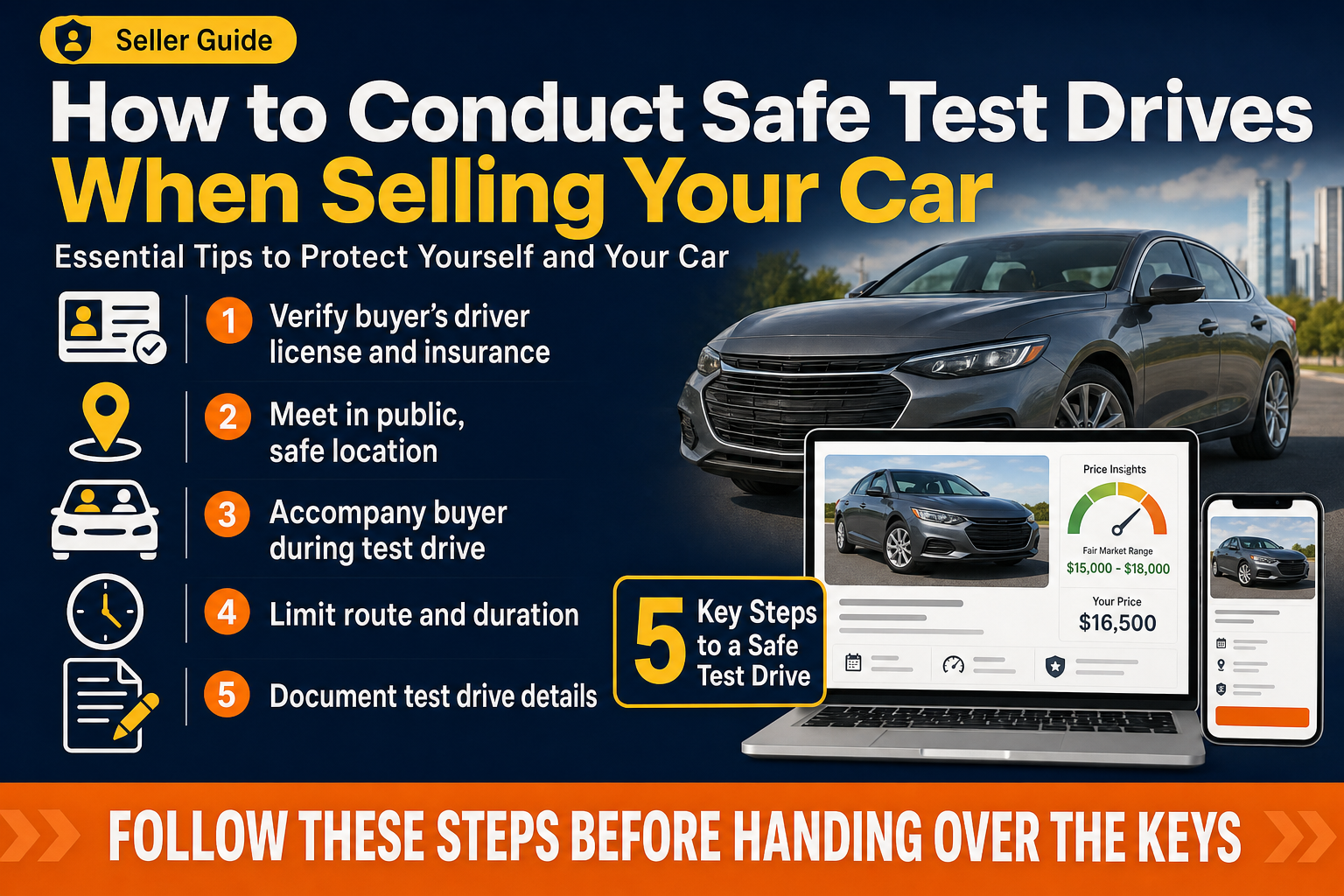
Mar 06 2026
How to Handle Test Drives Safely When Selling Your Car Privately
Allowing potential buyers to test drive your car is a crucial step in a private sale, but it comes with safety and liability risks. Knowing how to properly prepare and manage test drives can protect you and ensure a smooth transaction. This guide covers essential safety tips, verification steps, and best practices to follow before, during, and after the test drive. We’ll also highlight common pitfalls sellers encounter and how to avoid them.
T. K.
Read Article →