


How to Price Your Used Car to Sell Fast (Without Leaving Money on the Table)
Pricing your car too high leaves it sitting for weeks. Price it too low and you regret it the moment you hand over the keys. Here's how to find the sweet spot.

The Goldilocks Price: Not Too High, Not Too Low
Price moves buyers fast when it matches the car, the local market, and its condition. Set it too high, and views stall. Set it too low, and you lose money. Review model year, mileage, title status, repair history, and nearby sold listings. A fair number builds trust, brings calls, and helps you close with less back and forth.

How the Market Values Your Car (And What You Can Do About It)
Vehicle pricing is driven by mileage, condition, trim level, regional demand, and current market inventory. Understanding each factor helps you position your car competitively.
Pricing your vehicle correctly from day one dramatically shortens your selling timeline. Overpriced listings get ignored; underpriced listings attract buyers but hurt your wallet. Tools like Kelley Blue Book, Edmunds, and LazyChimp's live dealer network give you real-time market data.
Start by pulling your car's value from at least two independent sources — KBB private party and Edmunds True Market Value are solid starting points. Then factor in your vehicle's actual condition honestly. Minor scratches or high mileage can move the needle. If you're listing on LazyChimp, dealer bids will reflect current wholesale and retail demand, giving you a live price anchor to compare against. One strategic tip: list 3–5% above your floor price. It gives you negotiation room while staying attractive to serious buyers and competing dealer offers.
Read Latest Articles
Simple, transparent process that gets you the best price for your car
Mar 06 2026
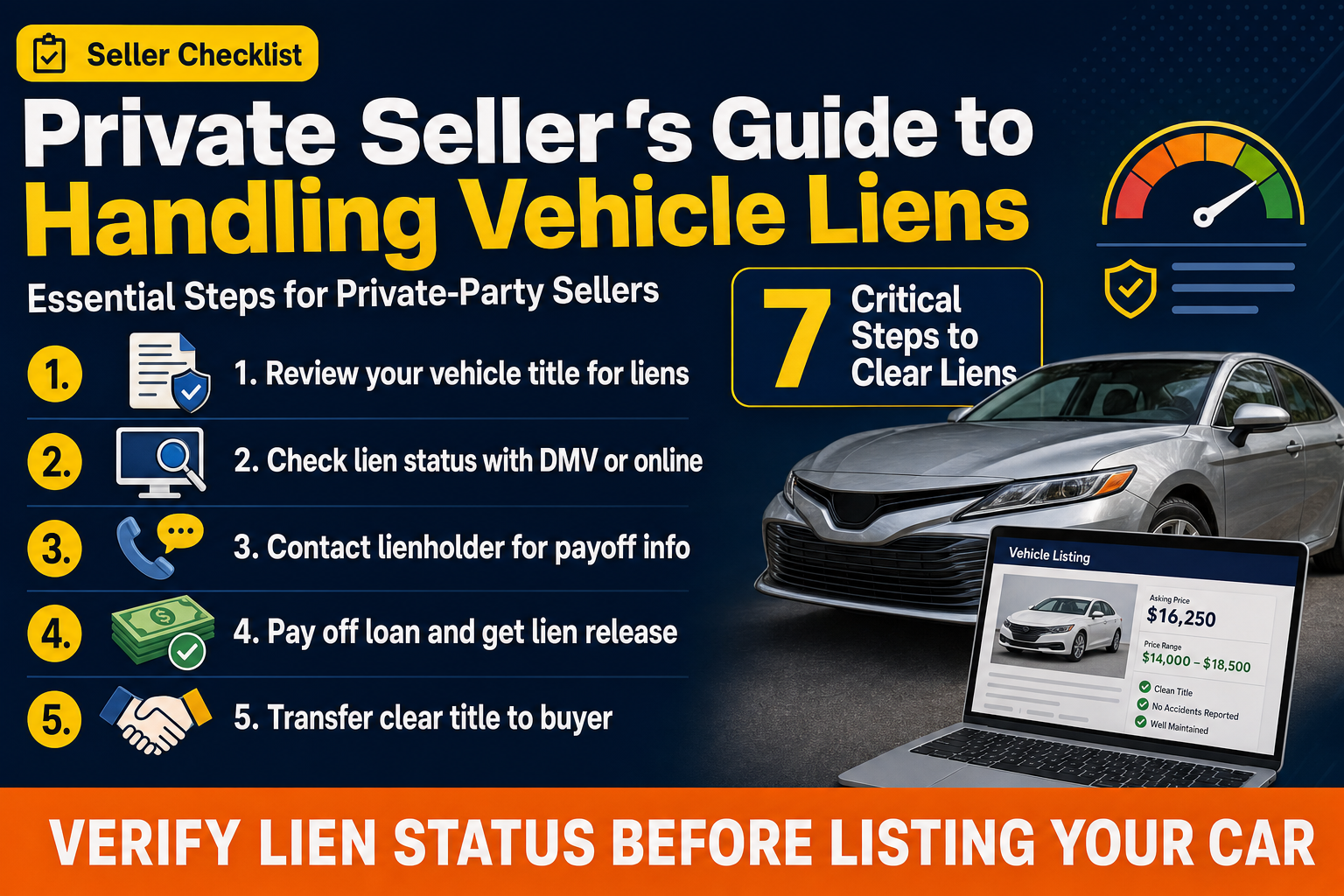
Private-Party Seller Checklist: How to Check for Liens Before Selling Your Car
Before selling your car privately, it’s essential to verify whether there are any liens on your vehicle. A lien means a lender or creditor has a legal claim on your car until a debt is paid off, which can complicate or invalidate your sale if not addressed. This checklist walks you through how to find out if your car has liens, what steps to take if liens exist, and how to clear them so you can sell your vehicle smoothly and legally.
T. K.
Read Article →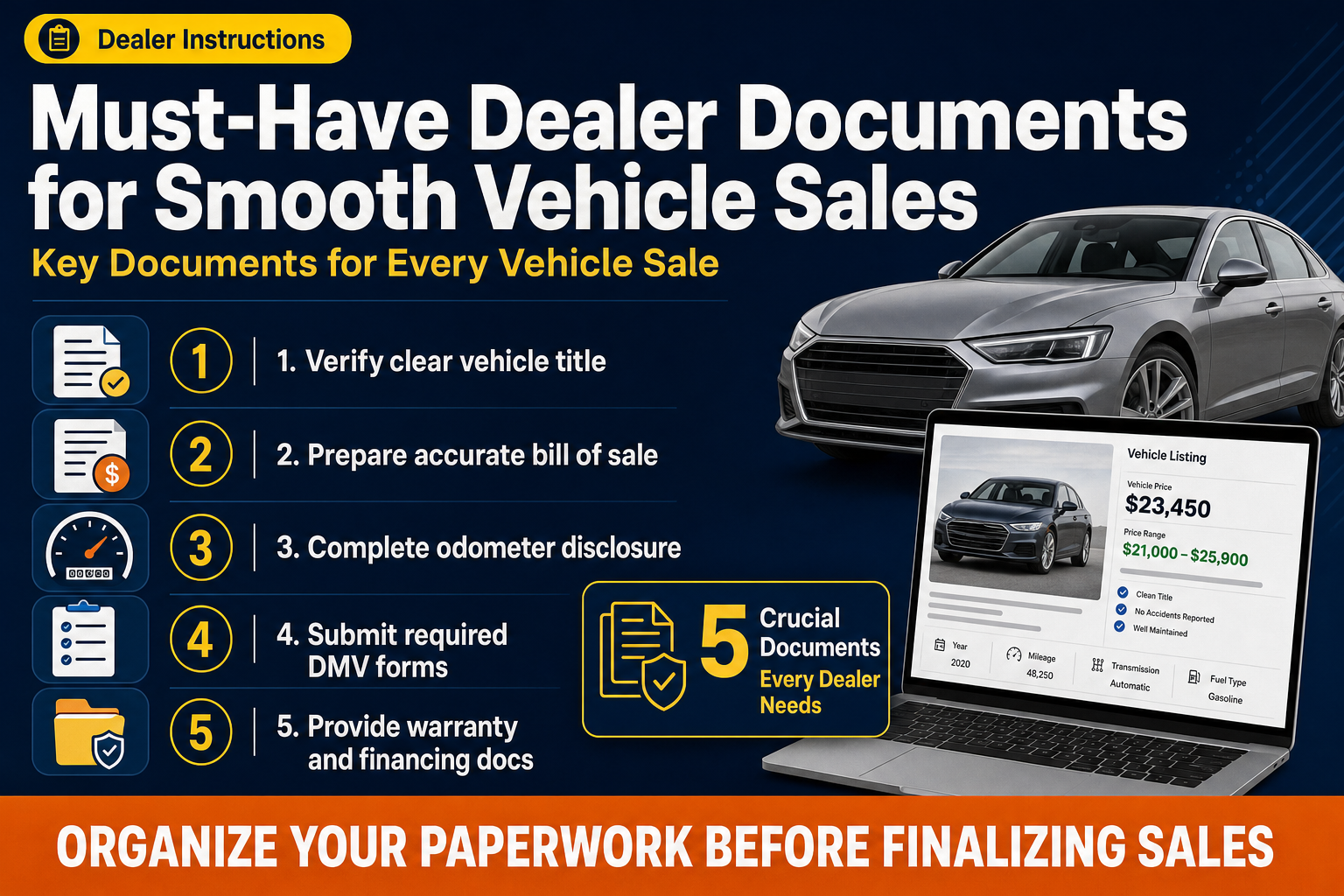
Mar 06 2026
Dealer Paperwork Essentials: What Documents You Must Prepare for Every Vehicle Sale
As a car dealer, handling paperwork accurately and efficiently is critical to closing sales and staying compliant with state regulations. Missing or incomplete documents can delay transactions or lead to legal issues. This article breaks down the essential documents dealers must prepare for every vehicle sale, including titles, bills of sale, disclosures, and DMV forms. We also cover best practices for organizing paperwork and avoiding common mistakes that slow down sales.
T. K.
Read Article →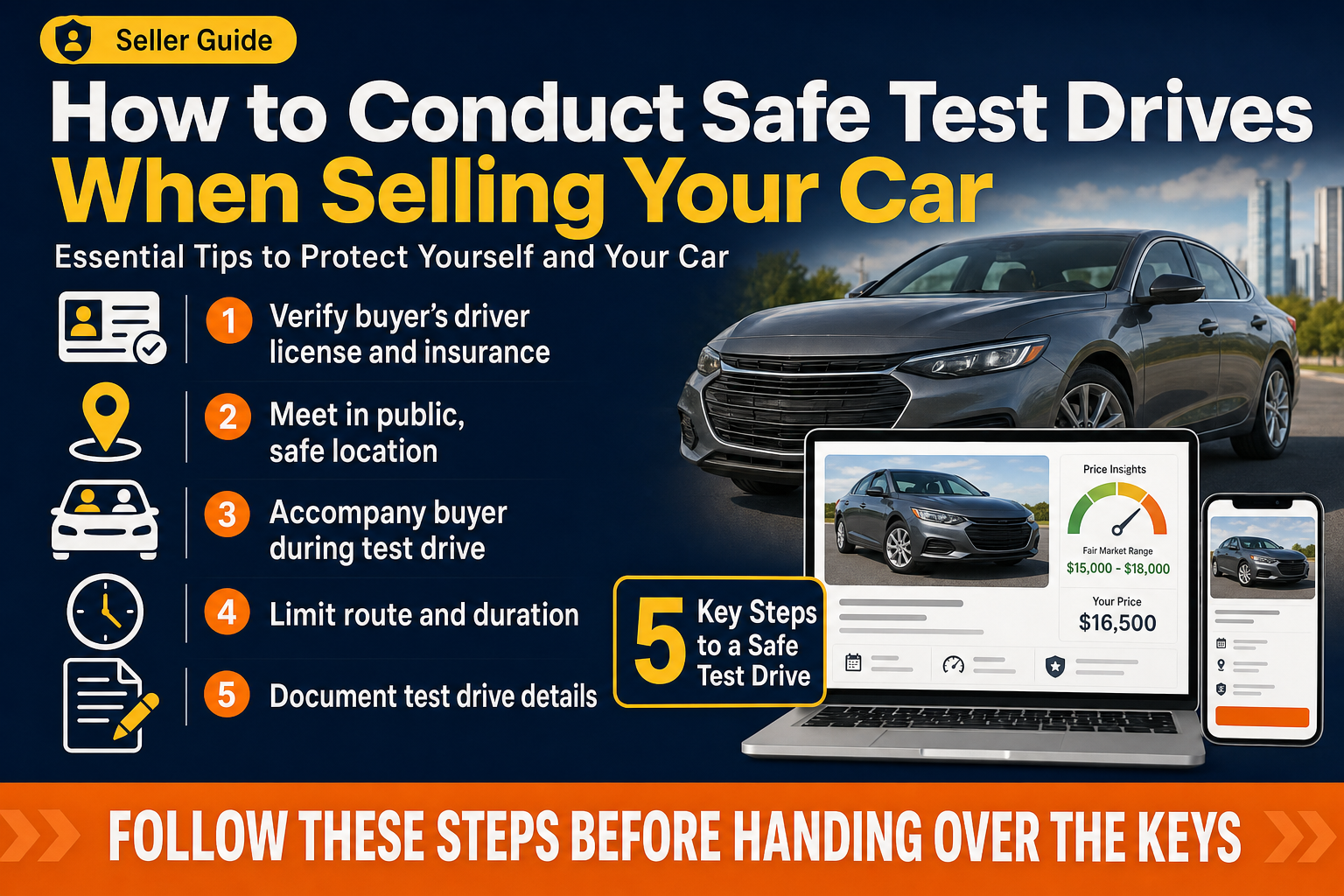
Mar 06 2026
How to Handle Test Drives Safely When Selling Your Car Privately
Allowing potential buyers to test drive your car is a crucial step in a private sale, but it comes with safety and liability risks. Knowing how to properly prepare and manage test drives can protect you and ensure a smooth transaction. This guide covers essential safety tips, verification steps, and best practices to follow before, during, and after the test drive. We’ll also highlight common pitfalls sellers encounter and how to avoid them.
T. K.
Read Article →