


The Emotional Side of Selling a Car (And How to Keep It From Costing You)
You drove this car to your kid's first day of school, on road trips, through tough commutes. Letting it go isn't just a transaction. But emotions can distort your price expectations — here's how to stay grounded.

Sentimental Value Is Real. Market Value Is What Sells Cars.
Your memories matter to you, but buyers pay based on age, mileage, condition, title status, and local demand. Emotional pricing often leaves listings sitting too long. Review sold comps and current supply in your area. A market based price brings better responses, stronger trust, and a higher chance of closing without drawn out negotiation.

Why Sellers Overprice Cars They Love
Behavioral economics research consistently shows that people value things they own more than the market does — a phenomenon called the endowment effect. Cars are especially susceptible because of memory and identity attachment.
Recognizing the emotional dimension of selling a car helps you separate what it means to you from what it is worth to a buyer. Grounding your pricing in market data rather than memory keeps the process moving — and keeps money in your pocket.
When you price your car based on how much you loved it, you're asking buyers to pay for memories they don't share. The result is an overpriced listing that sits, gets ignored, or forces you into repeated price drops that damage buyer trust. The healthiest approach is to research market comps first — before you decide on a price — so the data shapes your expectations rather than your attachment. Platforms like LazyChimp are particularly useful here because competitive dealer bids give you an objective, real-world anchor for your vehicle's value. Once you see what multiple dealers are willing to pay simultaneously, the market price becomes undeniable — and the emotional weight of letting go gets a little lighter.
Read Latest Articles
Simple, transparent process that gets you the best price for your car
Mar 06 2026
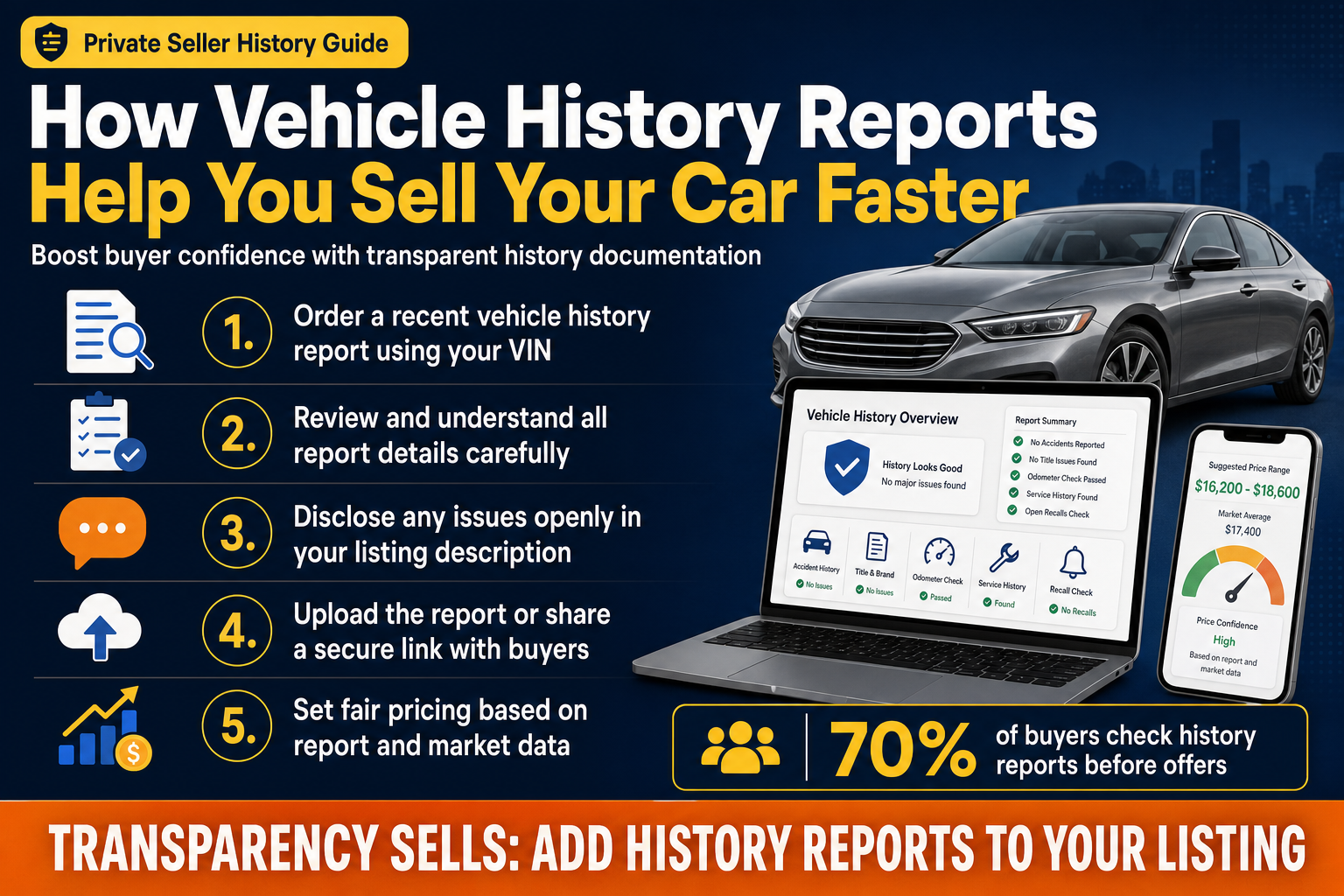
Essential Vehicle History Reports Every US Seller Should Provide
Selling your car privately? One of the most powerful tools to build trust and attract buyers is providing a detailed vehicle history report. These reports offer transparency about your car’s past — including accidents, title status, service records, and more — that buyers urgently want to know before making an offer. In this guide, you’ll learn exactly which vehicle history reports are important for US sellers, how to obtain them, and how to present this information effectively in your listings. We’ll also cover common pitfalls sellers face when they skip this step and how LazyChimp’s platform helps you showcase history reports to close sales faster. Ready to boost buyer confidence and sell smarter? Let’s dive into the must-have vehicle history documentation every private party seller should provide.
Anonymous
Read Article →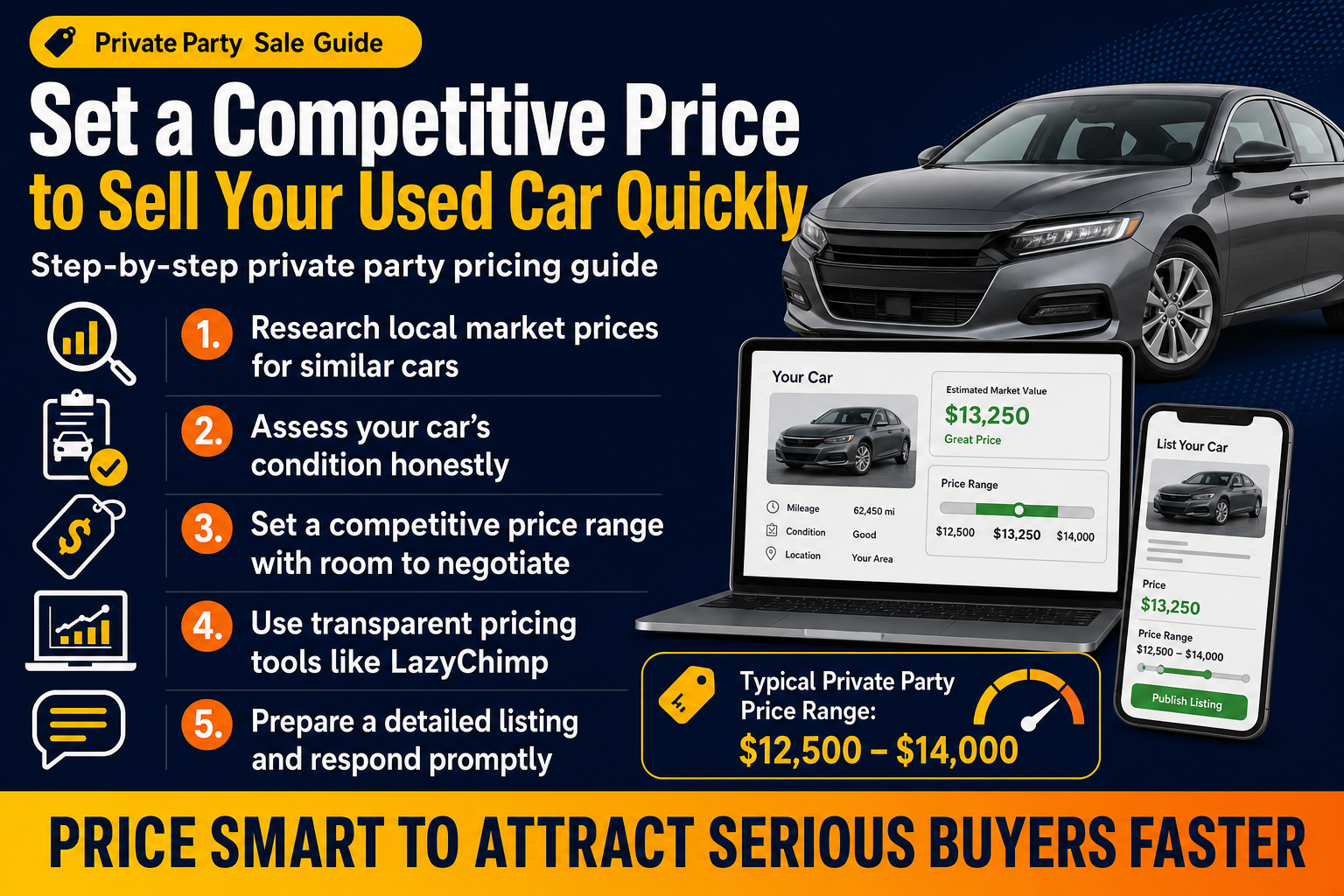
Mar 06 2026
How to Price Your Used Car Competitively for a Quick Private Sale
Selling your used car privately can be a rewarding way to get the best value, but setting the right price is crucial. Price it too high, and you risk scaring away potential buyers; price it too low, and you might leave money on the table.This guide walks you through practical steps to research and establish a competitive price for your vehicle. You'll learn how to balance market data, condition, and timing to attract serious buyers without undervaluing your car.By the end, you'll understand common pricing pitfalls to avoid and how tools like LazyChimp’s transparent pricing can give you an edge in today’s US car market.
Anonymous
Read Article →
Mar 06 2026
How to Price Your Used Car Competitively for a Faster Private Sale
Selling your car privately can be profitable, but pricing it right is crucial to attract buyers quickly. Overpricing means your vehicle sits on the market, while underpricing leaves money on the table. Understanding how to set a competitive price is key to a successful sale. In this guide, you will learn how to research market values, factor in your car’s condition, mileage, and location, and adjust your asking price strategically. We’ll also cover common pricing mistakes sellers make and share tips on how to leverage LazyChimp’s transparent pricing tools to your advantage. Whether you're selling a sedan, SUV, or pickup, this article provides actionable steps to price your used car competitively and sell faster without sacrificing value.
LazyChimp.Com
Read Article →