


Should You Repair Your Car Before Selling It?
Conventional wisdom says fix it up before you sell it. But is that always the right call? A new bumper or fresh paint might not return what it costs. Here's how to decide.

Not Every Repair Is Worth It Before a Sale
Some repairs raise buyer interest. Others waste money before a sale. Focus on items buyers notice first, such as lights, tires, glass, leaks, battery issues, and basic cleaning. Skip big work unless it changes safety or title value. Review cost against likely price gain, then fix what helps the car sell faster and with fewer objections.

The ROI Reality of Pre-Sale Repairs
Some repairs dramatically increase your sale price. Others cost more than they add in value. Knowing the difference saves you time, money, and stress before you even list.
The core question for every pre-sale repair is simple: will this cost me less than the value it adds? Mechanical reliability repairs almost always pay off. Cosmetic upgrades are hit or miss. Deep reconditioning before a dealer sale is usually unnecessary.
Focus on repairs that affect buyer confidence: a check engine light, bald tires, or a cracked windshield will spook buyers and suppress bids. Fixing these has high return on investment. On the flip side, a premium stereo upgrade or a full repaint rarely returns its cost — especially on a vehicle being sold wholesale to a dealer. If you're listing on LazyChimp, where the buyers are licensed dealers who know how to price repair costs accurately, you are often better off disclosing the issue and accepting a slightly lower bid than spending $1,500 on bodywork that adds $800 in perceived value. Get one or two repair estimates before committing, and ask yourself honestly: would this repair bring me that much more at sale?
Read Latest Articles
Simple, transparent process that gets you the best price for your car
Mar 06 2026
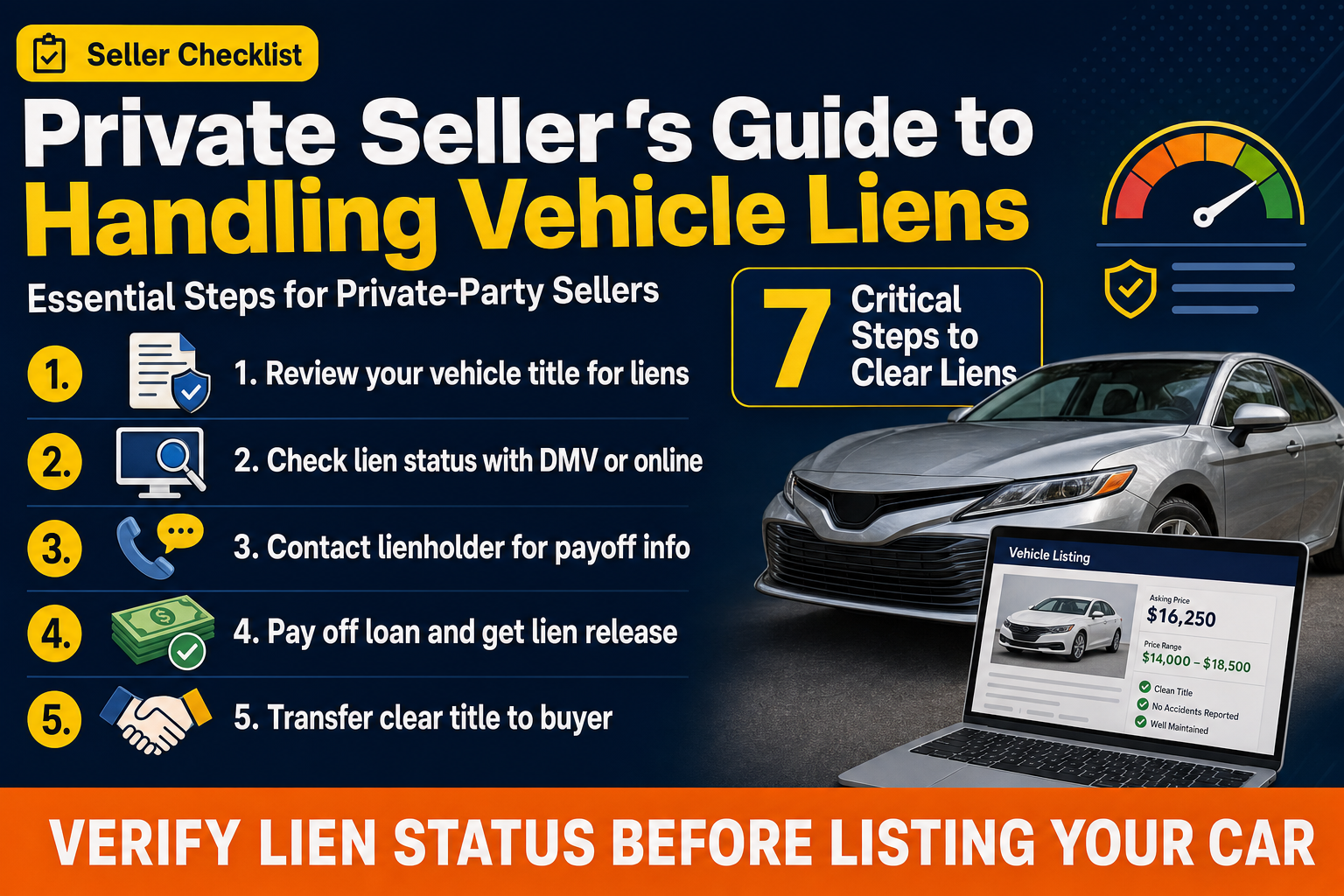
Private-Party Seller Checklist: How to Check for Liens Before Selling Your Car
Before selling your car privately, it’s essential to verify whether there are any liens on your vehicle. A lien means a lender or creditor has a legal claim on your car until a debt is paid off, which can complicate or invalidate your sale if not addressed. This checklist walks you through how to find out if your car has liens, what steps to take if liens exist, and how to clear them so you can sell your vehicle smoothly and legally.
T. K.
Read Article →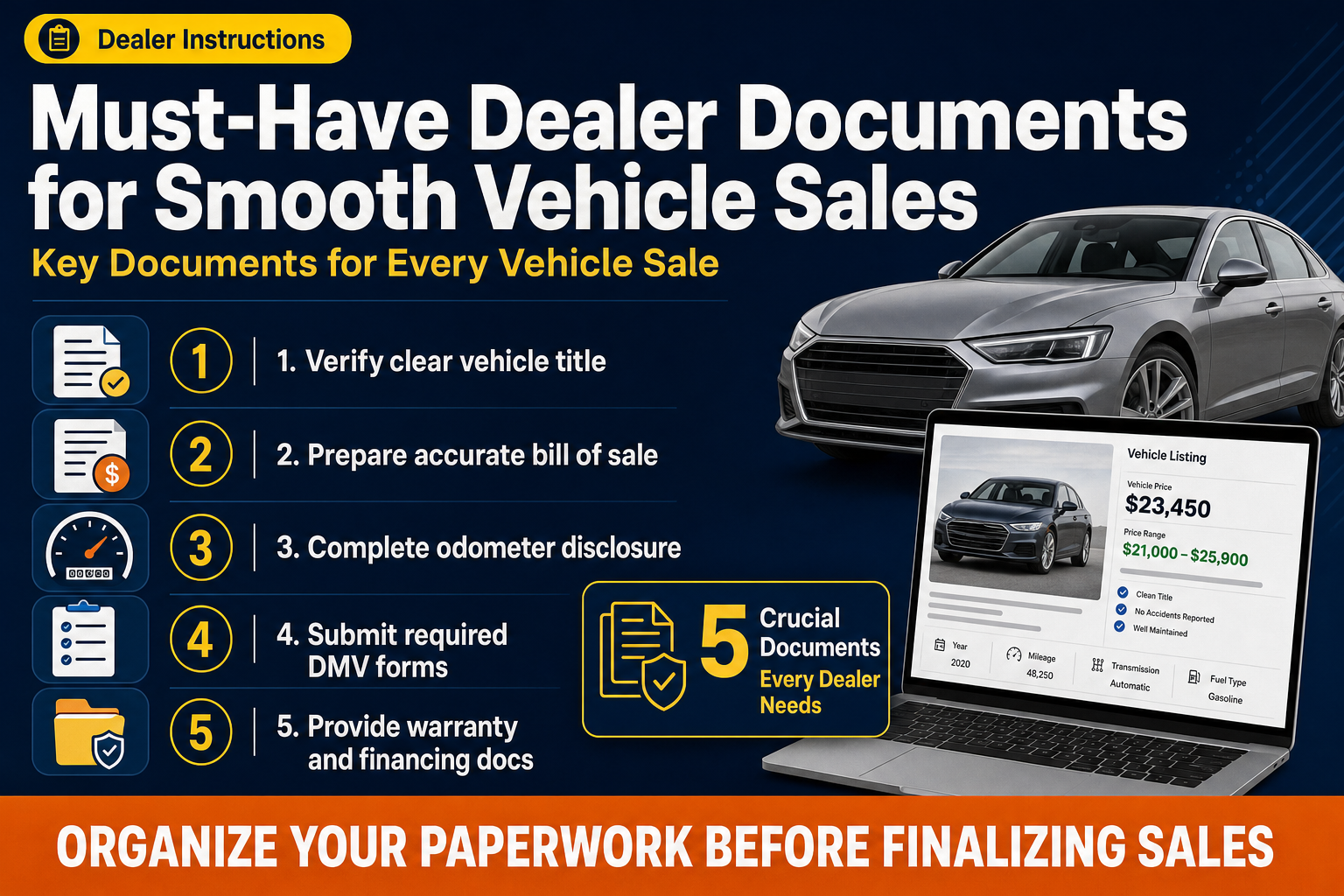
Mar 06 2026
Dealer Paperwork Essentials: What Documents You Must Prepare for Every Vehicle Sale
As a car dealer, handling paperwork accurately and efficiently is critical to closing sales and staying compliant with state regulations. Missing or incomplete documents can delay transactions or lead to legal issues. This article breaks down the essential documents dealers must prepare for every vehicle sale, including titles, bills of sale, disclosures, and DMV forms. We also cover best practices for organizing paperwork and avoiding common mistakes that slow down sales.
T. K.
Read Article →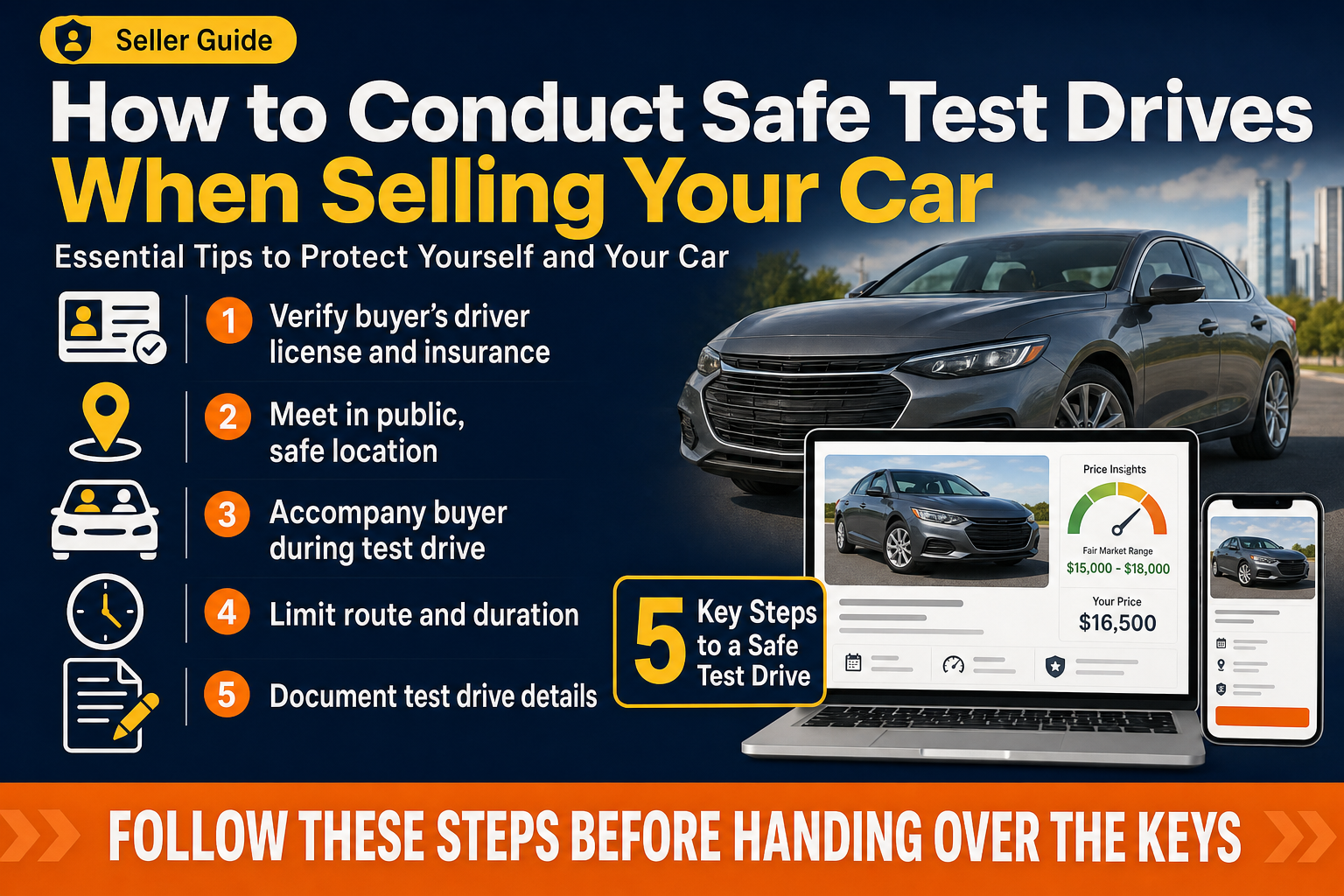
Mar 06 2026
How to Handle Test Drives Safely When Selling Your Car Privately
Allowing potential buyers to test drive your car is a crucial step in a private sale, but it comes with safety and liability risks. Knowing how to properly prepare and manage test drives can protect you and ensure a smooth transaction. This guide covers essential safety tips, verification steps, and best practices to follow before, during, and after the test drive. We’ll also highlight common pitfalls sellers encounter and how to avoid them.
T. K.
Read Article →