


Red Flags When Buying a Used Car: 15 Warning Signs to Never Ignore
Not every used car deal is a good deal. Some sellers — knowingly or unknowingly — are selling vehicles with serious hidden problems. This guide identifies the most critical red flags that should immediately raise your suspicion, and explains exactly what they could mean for your wallet.

Trust Your Gut — But Back It Up With Knowledge
Experienced car buyers develop an intuition for problematic vehicles. But intuition alone isn't enough — you need to know specifically what to look for and what each warning sign potentially indicates. Here are the 15 most important red flags every buyer should know.

15 Critical Red Flags in Used Car Buying
Each of these warning signs has a specific implication. Understanding what they mean empowers you to make an informed decision — whether to walk away, negotiate harder, or request a professional inspection.
A detailed breakdown of the 15 most significant red flags in the used car buying process, from pricing anomalies and seller behavior to physical inspection findings and documentation issues.
Red Flag 1: Price Significantly Below Market Value
If a car is priced 20–30% or more below comparable KBB or CarGurus listings in Illinois, ask why. While bargains exist, extreme underpricing often indicates hidden problems — mechanical issues, accident history, flood damage, active liens, or odometer fraud. Never let an attractive price bypass your due diligence.
Red Flag 2: Seller Refuses an Independent Mechanical Inspection
Any legitimate seller with nothing to hide will allow — and often encourage — an independent mechanic inspection. A seller who refuses, makes excuses, or pressures you to decide without an inspection is almost certainly aware of problems they don't want discovered.
Red Flag 3: Pressure to Decide Immediately
Legitimate sellers don't rush you. "I have another buyer coming tomorrow," "This offer is only good today," or "I need to sell by tonight" are common pressure tactics. Urgency is manufactured to prevent you from doing proper due diligence.
Red Flag 4: Seller Can't Produce Service Records
A well-maintained car has records: oil change receipts, dealership service records, or a maintenance logbook. A seller who has "lost" all maintenance records either bought the car recently and doesn't know its history, or the maintenance was consistently neglected. Either scenario should significantly reduce your offer or prompt you to walk away.
Red Flag 5: Mismatched Paint on Any Panel
Any panel that doesn't perfectly match the rest of the car indicates accident repair or hail damage repair. In Illinois, hail damage is common and can result in widespread panel replacement. The extent of the damage repaired determines how concerned you should be — verify with a CARFAX report.
Red Flag 6: Salvage or Rebuilt Title
An Illinois Salvage Title means the car was declared a total loss by an insurance company. A Rebuilt Title means it was repaired and reinspected. While rebuilt vehicles can be roadworthy, they carry significant drawbacks: lower resale value, difficulty obtaining full coverage insurance, and potential financing challenges. Always know the title type before making any offer.
Red Flag 7: Title Not in the Seller's Name
The seller must be the registered owner listed on the Illinois title. If the title is in someone else's name, you need a notarized Power of Attorney or bill of sale chain proving the seller's right to sell. Without this, you risk buying a vehicle that hasn't been legally transferred — which can create serious complications.
Red Flag 8: Excessive Air Fresheners Inside the Car
Multiple air fresheners or an overpoweringly perfumed interior is often an attempt to mask musty, moldy, or smoke odors. Open the doors for a few minutes, then get in and smell carefully with the fresh air cleared out. This is especially relevant in Illinois where basement flooding and river flooding regularly affects vehicles.
Red Flag 9: Engine Warning Lights
Any illuminated warning light on the dashboard — Check Engine, ABS, Airbag, Traction Control — represents an unresolved issue. Use an OBD-II scanner (available for free at AutoZone or O'Reilly Auto Parts in Illinois) to read the fault codes before making any offer.
Red Flag 10: Car Only Available for Night Viewings
Insisting on nighttime viewings makes it harder to detect paint issues, body damage, rust, and fluid leaks. Always insist on viewing any used car in full daylight. This is non-negotiable.
Read Latest Articles
Simple, transparent process that gets you the best price for your car
Mar 06 2026
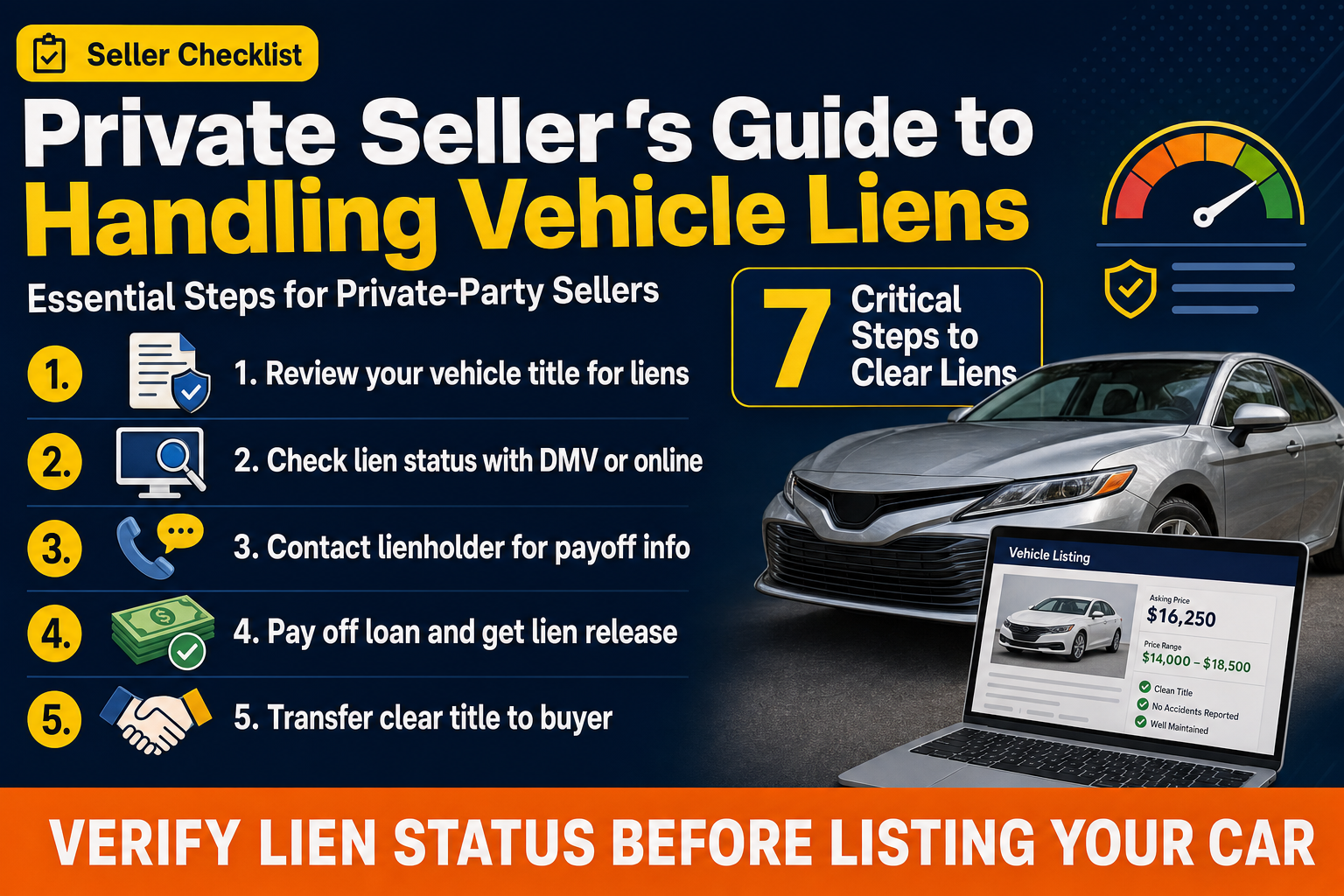
Private-Party Seller Checklist: How to Check for Liens Before Selling Your Car
Before selling your car privately, it’s essential to verify whether there are any liens on your vehicle. A lien means a lender or creditor has a legal claim on your car until a debt is paid off, which can complicate or invalidate your sale if not addressed. This checklist walks you through how to find out if your car has liens, what steps to take if liens exist, and how to clear them so you can sell your vehicle smoothly and legally.
T. K.
Read Article →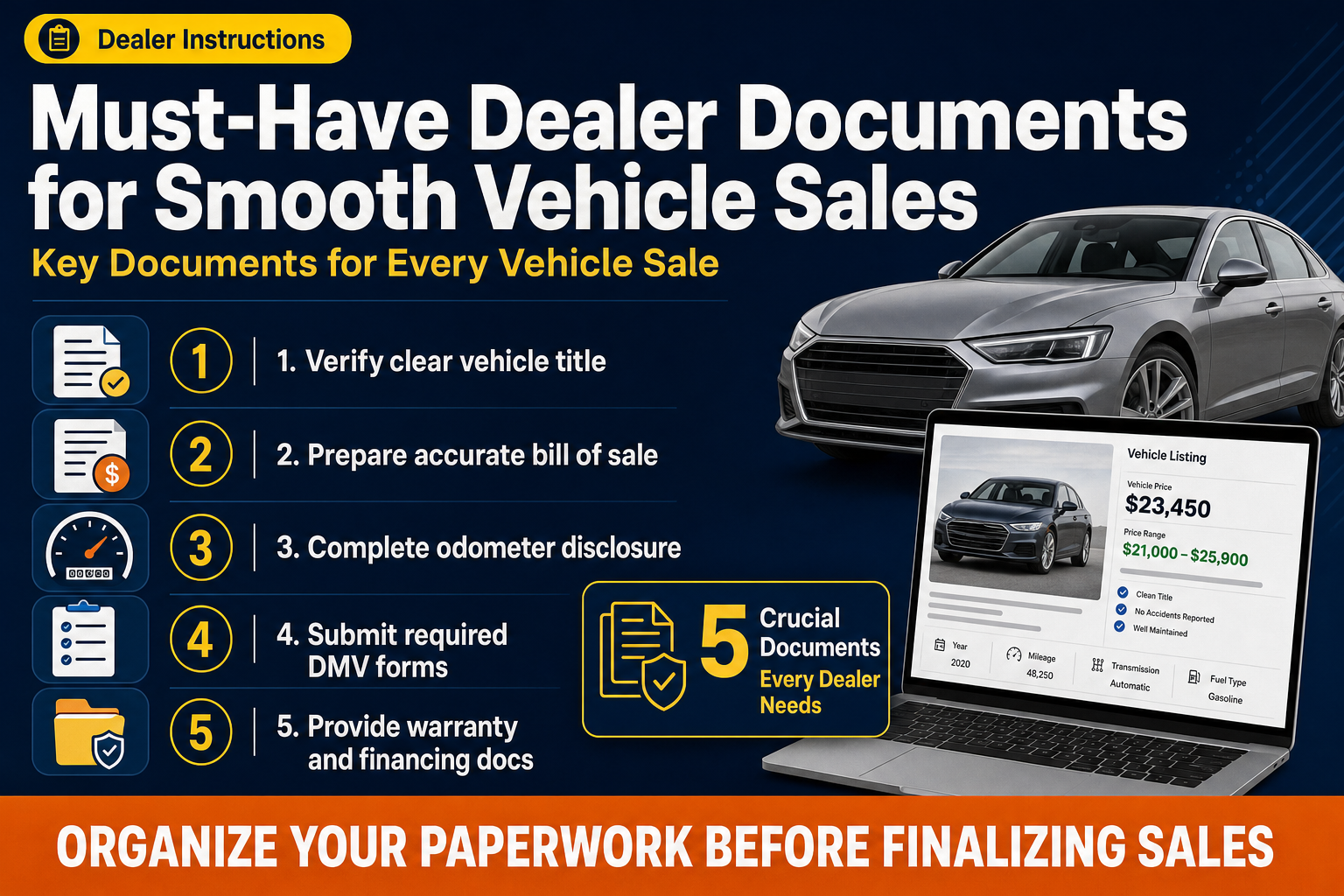
Mar 06 2026
Dealer Paperwork Essentials: What Documents You Must Prepare for Every Vehicle Sale
As a car dealer, handling paperwork accurately and efficiently is critical to closing sales and staying compliant with state regulations. Missing or incomplete documents can delay transactions or lead to legal issues. This article breaks down the essential documents dealers must prepare for every vehicle sale, including titles, bills of sale, disclosures, and DMV forms. We also cover best practices for organizing paperwork and avoiding common mistakes that slow down sales.
T. K.
Read Article →
Mar 06 2026
How to Handle Test Drives Safely When Selling Your Car Privately
Allowing potential buyers to test drive your car is a crucial step in a private sale, but it comes with safety and liability risks. Knowing how to properly prepare and manage test drives can protect you and ensure a smooth transaction. This guide covers essential safety tips, verification steps, and best practices to follow before, during, and after the test drive. We’ll also highlight common pitfalls sellers encounter and how to avoid them.
T. K.
Read Article →