


Never Buy a Car Without Checking the Engine First
The engine is the heart of any vehicle. A beautiful exterior means nothing if the engine is worn out, leaking, or has hidden damage. This guide walks you through exactly what to inspect under the hood — even if you're not a mechanic — so you can walk into any car viewing with confidence.

What to Look For Under the Hood
Many buyers make the mistake of focusing only on the car's appearance and test drive. But spending just 10–15 minutes inspecting the engine bay can save you from buying a vehicle with serious — and expensive — mechanical problems. Here's your complete checklist.

Your Complete Engine Inspection Checklist
Follow this systematic approach used by professional pre-purchase inspectors to evaluate any engine — petrol, diesel, or hybrid.
From checking oil condition to listening for unusual sounds, this checklist covers every critical engine inspection point a buyer should perform before making an offer.
Step 1: Check the Engine Oil
Pull out the oil dipstick, wipe it clean, reinsert it, then pull it out again. The oil level should be between the MIN and MAX markers. More importantly, check the color and consistency. Fresh, healthy oil is amber or light brown. Black, sludgy oil indicates neglected maintenance. Milky, frothy oil is a serious red flag — it suggests coolant has mixed with the oil, often caused by a blown head gasket, which can cost $1,500–$3,000 to repair at an Illinois shop.
Step 2: Inspect the Coolant
Locate the coolant reservoir (a translucent plastic tank near the radiator). The level should be between MIN and MAX. The coolant should be bright green, blue, or orange depending on the type. Brown, rusty, or oily coolant indicates contamination or neglect. Never open the radiator cap on a warm engine — the system is pressurized and can cause severe burns.
Step 3: Check for Oil Leaks
Look at the bottom of the engine and the engine bay floor. Fresh oil stains or a buildup of grime and oil around gaskets, the valve cover, or the oil pan indicate leaks. Minor seeps may not be immediately critical, but significant leaks signal neglected maintenance and potential expensive repairs ahead.
Step 4: Inspect the Belts and Hoses
Check the serpentine belt (the main drive belt) and any visible timing belt cover. Belts should be free of cracks, fraying, or glazing. Squeeze the rubber hoses — they should feel firm and flexible, not brittle, spongy, or collapsed. Cracked or swollen hoses are a deferred maintenance warning sign — especially common in older vehicles that have sat through multiple Illinois winters.
Step 5: Look for Rust and Corrosion
Inspect the engine block, cylinder head, and surrounding metal components for rust and corrosion. Illinois road salt causes accelerated corrosion on undercarriage components, brackets, and coolant passages. Surface rust on exterior engine parts is common in older Midwest vehicles, but deep rust on the engine block is a serious concern.
Step 6: Listen to the Engine Running
Start the engine from cold if possible — this reveals problems that disappear once warmed up. Listen for ticking, knocking, rattling, or hissing sounds. A rhythmic tick may indicate low oil pressure or worn valve train components. A deep knock is a serious warning of engine bearing wear. A hissing sound can indicate a vacuum or coolant leak.
Step 7: Check for Smoke from the Exhaust
Watch the exhaust during startup and while idling. White smoke on a cold start that disappears after warming up is normal condensation — especially common in cold Illinois mornings. Persistent white smoke can indicate a coolant leak into the combustion chamber. Blue smoke means the engine is burning oil. Black smoke indicates a rich fuel mixture.
Step 8: Have a Pre-Purchase Inspection Done
For any used car purchase over $10,000, we strongly recommend paying for a professional pre-purchase inspection (PPI) at a trusted independent mechanic or a shop like Firestone, Midas, or a local independent garage across Illinois. A full PPI typically costs $100–$200 and can save you from a $2,000–$8,000 repair bill down the road.
Read Latest Articles
Simple, transparent process that gets you the best price for your car
Mar 06 2026
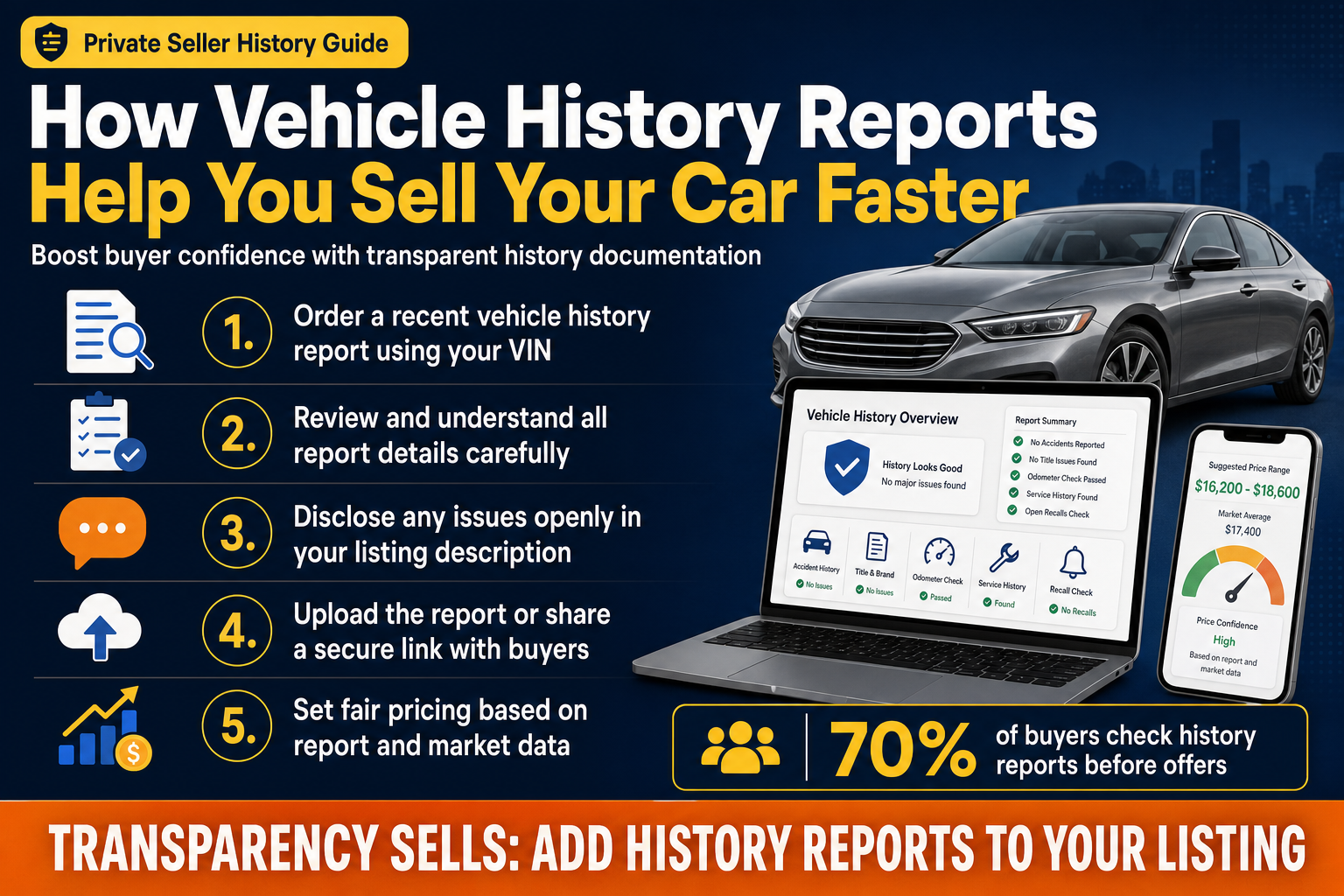
Essential Vehicle History Reports Every US Seller Should Provide
Selling your car privately? One of the most powerful tools to build trust and attract buyers is providing a detailed vehicle history report. These reports offer transparency about your car’s past — including accidents, title status, service records, and more — that buyers urgently want to know before making an offer. In this guide, you’ll learn exactly which vehicle history reports are important for US sellers, how to obtain them, and how to present this information effectively in your listings. We’ll also cover common pitfalls sellers face when they skip this step and how LazyChimp’s platform helps you showcase history reports to close sales faster. Ready to boost buyer confidence and sell smarter? Let’s dive into the must-have vehicle history documentation every private party seller should provide.
Anonymous
Read Article →
Mar 06 2026
How to Price Your Used Car Competitively for a Quick Private Sale
Selling your used car privately can be a rewarding way to get the best value, but setting the right price is crucial. Price it too high, and you risk scaring away potential buyers; price it too low, and you might leave money on the table.This guide walks you through practical steps to research and establish a competitive price for your vehicle. You'll learn how to balance market data, condition, and timing to attract serious buyers without undervaluing your car.By the end, you'll understand common pricing pitfalls to avoid and how tools like LazyChimp’s transparent pricing can give you an edge in today’s US car market.
Anonymous
Read Article →
Mar 06 2026
How to Price Your Used Car Competitively for a Faster Private Sale
Selling your car privately can be profitable, but pricing it right is crucial to attract buyers quickly. Overpricing means your vehicle sits on the market, while underpricing leaves money on the table. Understanding how to set a competitive price is key to a successful sale. In this guide, you will learn how to research market values, factor in your car’s condition, mileage, and location, and adjust your asking price strategically. We’ll also cover common pricing mistakes sellers make and share tips on how to leverage LazyChimp’s transparent pricing tools to your advantage. Whether you're selling a sedan, SUV, or pickup, this article provides actionable steps to price your used car competitively and sell faster without sacrificing value.
LazyChimp.Com
Read Article →