


How to Transfer Car Ownership in Illinois: Complete Step-by-Step Guide
Whether you're buying or selling a used car in Illinois, transferring the vehicle's title to the new owner is a mandatory legal requirement. Skip this step and the previous owner remains legally liable for the car — or you end up unable to properly register it. This step-by-step guide walks you through the entire Illinois title transfer process.

Why Proper Title Transfer Protects Both Buyer and Seller in Illinois
For sellers: until the vehicle title is transferred to the new owner's name with the Illinois Secretary of State's office, you may remain legally and financially exposed if the car is involved in an accident or traffic violation. For buyers: without a proper title transfer, you cannot renew the vehicle's registration, sell it in the future, or prove legal ownership in court.

Step-by-Step: Illinois Title Transfer Process
Follow these steps in order to complete a legal and smooth vehicle title transfer with the Illinois Secretary of State.
A complete, up-to-date guide to transferring vehicle ownership in Illinois, including all required documents, fees, taxes, and practical tips to avoid common delays.
Step 1: Complete the Assignment of Title
The Illinois Certificate of Title has an assignment section on the back. The seller must complete this section in full: print the buyer's name and address, the sale date, the selling price, and the current odometer reading. Both the seller and buyer must sign where indicated. Use a ballpoint pen and press firmly — this is a legal document. Do not use white-out or correction fluid anywhere on the title.
Step 2: Complete the Odometer Disclosure
For vehicles under 10 years old and under 16,000 lbs., federal law requires an Odometer Disclosure Statement. This is typically integrated into the title assignment section. The seller certifies the actual mileage at the time of sale. Falsifying this is a federal crime and grounds to rescind the sale.
Step 3: Prepare a Bill of Sale (Recommended)
While not always legally required in Illinois for private party sales, a Bill of Sale is highly recommended. It should include: both parties' full names and addresses, the vehicle's VIN, make, model, year, and mileage, the agreed sale price, and the date of sale. Both parties sign. This document protects both buyer and seller in any post-sale dispute and is required if applying for a tax exemption (such as a gift between family members using Form RUT-50).
Step 4: Buyer Applies for New Title at the Secretary of State
The buyer must visit an Illinois Secretary of State facility within 20 days of the sale to apply for a new title. Required documents include: the assigned title signed by the seller, completed Form RUT-50 (Private Party Vehicle Tax Transaction), valid government-issued photo ID, and payment for title and tax fees.
Step 5: Pay Illinois Private Party Use Tax
Illinois requires buyers to pay a Private Party Vehicle Use Tax based on the purchase price. As of the current rate schedule, purchases of $15,000–$19,999 are taxed at 7.25%, while purchases of $20,000–$24,999 are taxed at 8.25%, and $25,000 and above at 9.25%. This tax is paid when you apply for your new title using Form RUT-50. Keep your Bill of Sale as proof of the actual purchase price.
Step 6: Pay Title and Registration Fees
Illinois title transfer fees are approximately $150 for the title application. Registration fees vary by vehicle weight, starting around $151/year for standard passenger vehicles. Bring a check or money order — many Secretary of State facilities do not accept credit cards for title transactions.
Step 7: Receive Your New Illinois Title
The Illinois Secretary of State typically processes title applications and mails the new title within 6–8 weeks. You will receive a registration card and new license plates (or transfer your existing plates) at the facility. Keep your temporary registration receipt until your new title arrives.
Seller's Responsibility After the Sale
After selling your vehicle, complete a Vehicle Transaction Report (available on the Illinois Secretary of State website) within 7 days of the sale. This notifies the state that you are no longer the owner and protects you from liability for tickets, tolls, or accidents that occur after the sale date. Cancel or transfer your insurance on the sold vehicle promptly.
Read Latest Articles
Simple, transparent process that gets you the best price for your car
Mar 06 2026
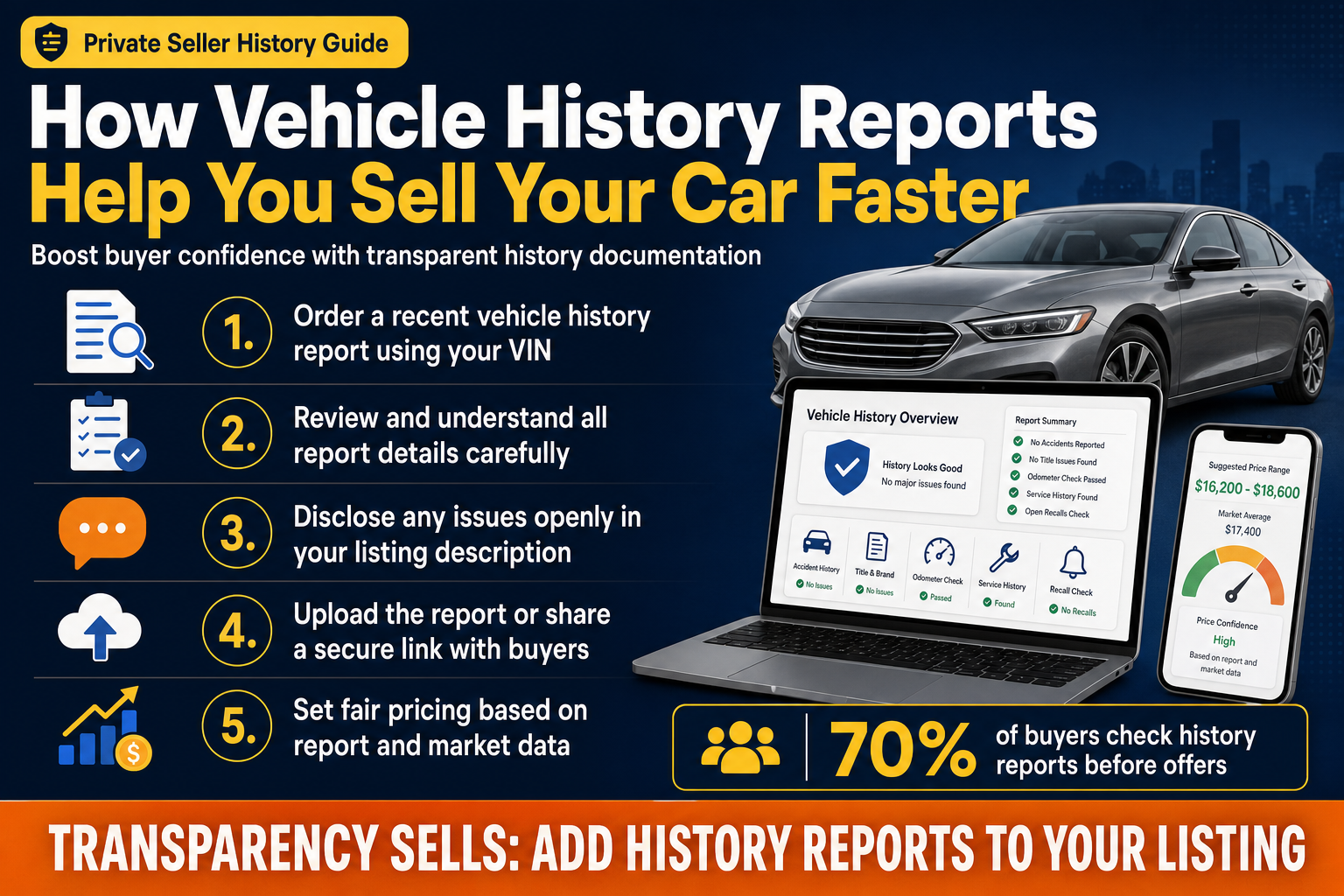
Essential Vehicle History Reports Every US Seller Should Provide
Selling your car privately? One of the most powerful tools to build trust and attract buyers is providing a detailed vehicle history report. These reports offer transparency about your car’s past — including accidents, title status, service records, and more — that buyers urgently want to know before making an offer. In this guide, you’ll learn exactly which vehicle history reports are important for US sellers, how to obtain them, and how to present this information effectively in your listings. We’ll also cover common pitfalls sellers face when they skip this step and how LazyChimp’s platform helps you showcase history reports to close sales faster. Ready to boost buyer confidence and sell smarter? Let’s dive into the must-have vehicle history documentation every private party seller should provide.
Anonymous
Read Article →
Mar 06 2026
How to Price Your Used Car Competitively for a Quick Private Sale
Selling your used car privately can be a rewarding way to get the best value, but setting the right price is crucial. Price it too high, and you risk scaring away potential buyers; price it too low, and you might leave money on the table.This guide walks you through practical steps to research and establish a competitive price for your vehicle. You'll learn how to balance market data, condition, and timing to attract serious buyers without undervaluing your car.By the end, you'll understand common pricing pitfalls to avoid and how tools like LazyChimp’s transparent pricing can give you an edge in today’s US car market.
Anonymous
Read Article →
Mar 06 2026
How to Price Your Used Car Competitively for a Faster Private Sale
Selling your car privately can be profitable, but pricing it right is crucial to attract buyers quickly. Overpricing means your vehicle sits on the market, while underpricing leaves money on the table. Understanding how to set a competitive price is key to a successful sale. In this guide, you will learn how to research market values, factor in your car’s condition, mileage, and location, and adjust your asking price strategically. We’ll also cover common pricing mistakes sellers make and share tips on how to leverage LazyChimp’s transparent pricing tools to your advantage. Whether you're selling a sedan, SUV, or pickup, this article provides actionable steps to price your used car competitively and sell faster without sacrificing value.
LazyChimp.Com
Read Article →